
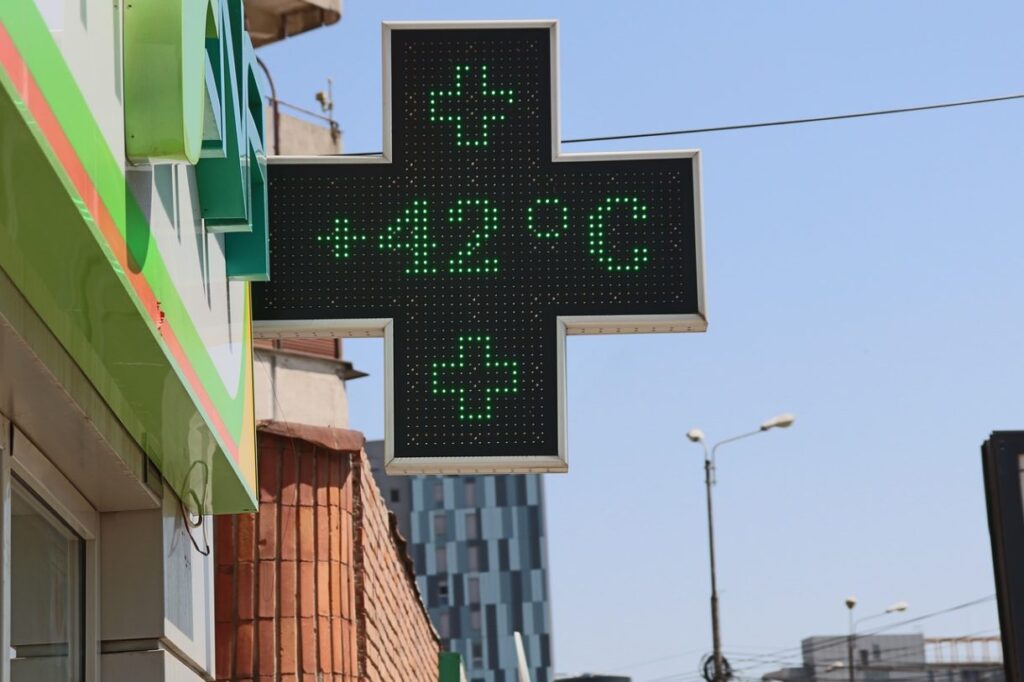
The historic heatwave is pushing not only France’s hospitals, schools, and emergency services to their limits – it is increasingly developing into a political crisis. Prime Minister François Bayrou’s government is facing sharp accusations from nearly all political camps. Opposition parties, mayors, and environmental groups accuse the executive of responding too late and hesitantly to the extraordinary weather situation.
The criticism is particularly strong from the left. Representatives of La France insoumise and the Greens speak of a “failure of preventative policy.” Although France has had a national heat plan since the devastating heatwave of 2003, many of the planned measures have still been only inadequately implemented. Schools, nursing homes, and numerous public buildings remain poorly protected against extreme temperatures in particular.
The Socialists also demand a fundamental change of course. In view of increasingly frequent heatwaves, politics must no longer act exclusively in crisis mode. Long-term investments in adapting cities, buildings, and infrastructure to the consequences of climate change are necessary.
However, criticism does not only come from the left. Representatives of the conservative camp also accuse the government of a lack of coordination. Several mayors complain that they have been largely left to deal with the consequences of the heat on their own. Municipalities have to set up cooling rooms at short notice, distribute drinking water, and care for particularly vulnerable people, but often lack sufficient financial resources and enough personnel.
The Rassemblement National is also using the situation to attack the government. The party speaks of “chaotic crisis management” and criticizes especially the short-term decisions regarding large events as well as the increasing strain on the healthcare system.
The government rejects the accusations. President Emmanuel Macron emphasized that France has made significant progress in protecting the population since the heat disaster of 2003. Health Minister Yannick Neuder points to the activation of the national heat plan, close cooperation with the prefectures, and extensive warning and information campaigns. However, given a heatwave of this magnitude, the state’s scope for action is not unlimited.
Regardless of the political debate, the current situation once again reveals structural deficits. Many schools still lack adequate thermal insulation or suitable cooling systems. Numerous hospitals are already operating at capacity limits, while densely built cities lack shade-giving green spaces that could at least partially mitigate the effects of extreme heat.
The opposition therefore demands that the current heatwave not be treated as an exceptional isolated case, but as a clear signal that France must significantly accelerate its adaptation to climate change. The government is likely to face further debates in parliament in the coming days – because with every new heatwave, the political pressure grows.
Author: P. Tiko