
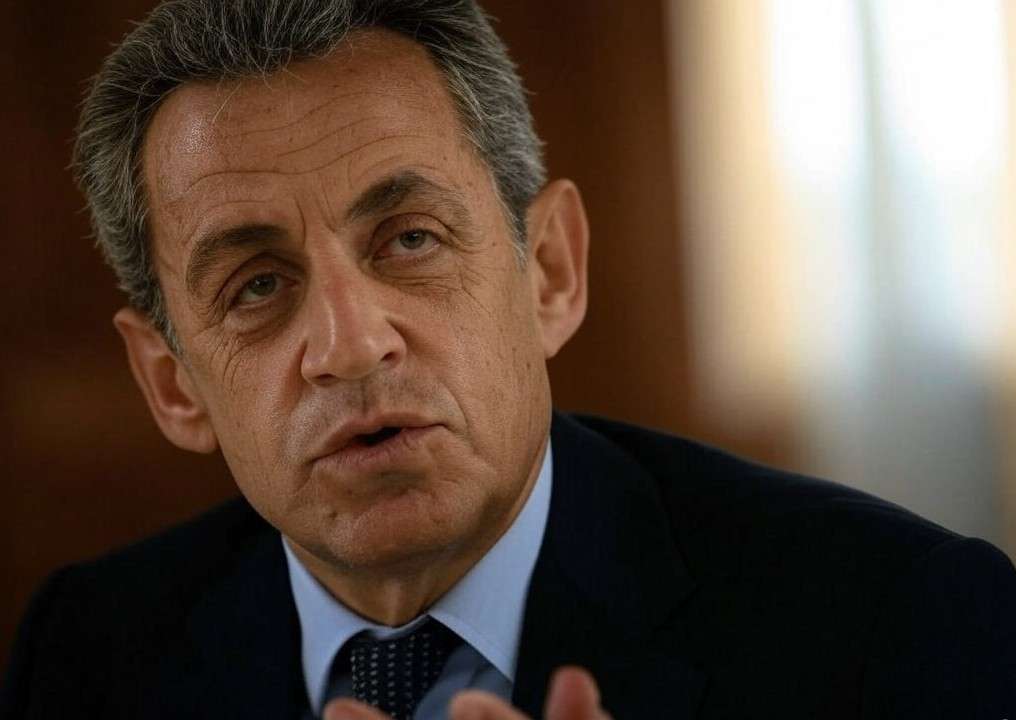
The former French President Nicolas Sarkozy officially filed a complaint with the European Court of Human Rights (ECHR) in Strasbourg on March 20, 2025. This decision follows his final conviction in December 2024 for corruption and influence peddling in the so-called “Bismuth” case. The reaction is expected to have not only legal but also political and institutional implications.
A verdict with symbolic impact
Sarkozy was sentenced to three years in prison in December 2024, one year of which is served under electronic house arrest. Since February, he has been wearing an electronic ankle monitor. The former president was found guilty of attempting in 2014, through his lawyer Thierry Herzog, to obtain secret information from a senior judge of the Cour de cassation, Gilbert Azibert. In return, Sarkozy allegedly promised Azibert a highly paid position in Monaco. The investigation was based on intercepted phone calls in which Sarkozy used a pseudonym: Paul Bismuth.
By deciding to bring the case before the ECHR, Sarkozy openly questions the independence and fairness of the French judicial system. His lawyer Patrice Spinosi justified the move with the necessity to have Sarkozy’s rights protected by a European body, as they were violated by the national courts.
Rule of law under scrutiny
The complaint before the ECHR presumably targets Article 6 of the European Convention on Human Rights, which guarantees the right to a fair trial. Central to this is likely the question of whether the use of wiretapped communication between Sarkozy and his lawyer constitutes a violation of attorney-client confidentiality. This principle holds a high value in both French and European law.
If the ECHR concludes that the proceedings against Sarkozy did not meet minimum standards of the rule of law, it would be an affront to the French judicial system. It is still unclear whether the court will accept the complaint for a decision. However, the outcome could have far-reaching consequences for the interpretation of procedural standards in Europe.
A presidential exceptional status?
The debate about Sarkozy is also a debate about the relationship between the judiciary and politics. Supporters of the former president complain of an allegedly politically motivated judiciary. Opponents see the conviction as proof of the rule of law’s ability to act. Especially in a country like France, historically shaped by a strong presidential system, the judiciary has rarely taken such a clear stance against a former president.
The fact that Sarkozy is still involved in other proceedings – including the allegedly illegal financing of his 2007 election campaign by the Libyan dictator Muammar al-Gaddafi – increases public interest. Sarkozy denies any wrongdoing in this case as well. The number of proceedings contributes to the perception of a persistent political-judicial crisis, whose effects go far beyond the specific case.
Trust in institutions put to the test
The repeated involvement of former top politicians in legal scandals weakens citizens’ trust in democratic institutions. According to surveys, the reputation of the political class in France has suffered significantly in recent years. The Sarkozy case is not an isolated incident: other former government members like François Fillon or Claude Guéant have also had to answer in court.
At the same time, the trial of a former president before an international court shows that the European legal order is increasingly seen by political elites as a corrective to the national judiciary. This can be regarded as a strength of the European system – or as an expression of an erosion of trust in the national legal system.
The ECHR as the last instance
The role of the ECHR in political proceedings is gaining increasing importance. As a supranational body, it provides a legal safety net for those who feel unfairly treated by their national system. The Sarkozy case thus becomes a litmus test for the balance between national sovereignty and the European legal community.
Whether the Court ultimately agrees with Sarkozy’s argument remains to be seen. However, it is already clear: The Bismuth case has the potential to shape France’s political and legal landscape far beyond the year 2025.