
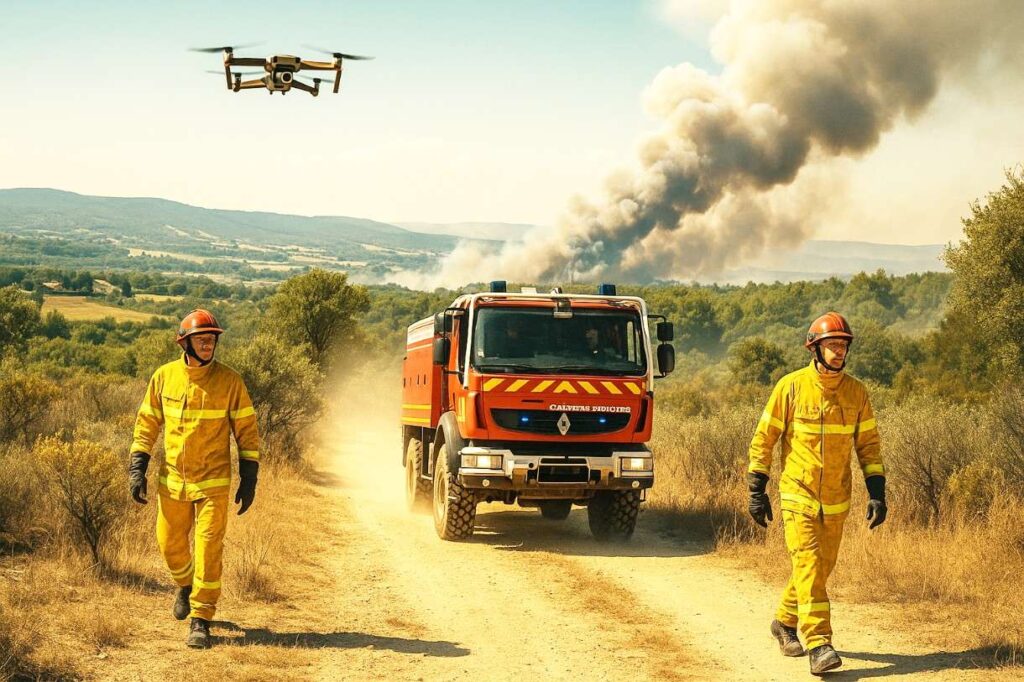
Even before summer officially begins, many people in southern France are already focusing on a risk that is usually associated with the hot months of July and August: wildfires. An orange warning level is currently in effect in four departments: Aude, Hérault, Var and Bouches-du-Rhône. These areas attract numerous tourists every year and are also among the particularly high-risk regions of the country.
The early warning is surprising. Wildfire alerts generally receive greater attention later in the summer. This time, however, weather conditions require increased caution. Dry air, strong winds and increasingly dry vegetation create conditions in which fires can start and spread rapidly.
The orange warning level does not mean that a fire has already broken out. It is a preventive stage in which the French weather service regularly assesses current weather conditions and the dryness of vegetation. If the risk increases, appropriate warnings are issued for the affected departments.
For residents and tourists, this warning has practical consequences. The prefecture can suddenly restrict access to forest areas, natural parks, garrigue landscapes or popular hiking trails. If you are planning an impromptu trip inland, you should check the information in advance. What is permitted in the morning may be prohibited by the afternoon.
Leisure activities are also being monitored more closely. Outdoor barbecues, fireworks, or the use of equipment that may produce sparks are often added to the list of prohibited activities during such periods. Authorities are acting not out of excessive caution, but based on experience. A single small spark is enough to ignite dry grass or bushes.
There is one important figure that is cited every year and still surprises many people: nine out of ten wildfires are caused by human activity. Usually there is no malicious intent; carelessly discarded cigarette butts, campfires that have not been fully extinguished, and spark-producing machinery are often to blame.
Especially in the Mediterranean landscapes of southern France, flames can spread very quickly under unfavorable conditions. Strong winds can turn a small ember into an uncontrollable blaze within minutes. Firefighters then have to begin a race against time.
The main purpose of this warning is to prevent damage before it occurs. Anyone visiting affected areas in the coming days should take the authorities’ guidance seriously and exercise particular caution. This may sound like common sense, but it often makes the decisive difference between a quiet summer day and a disaster.
If you see smoke or flames, contact the emergency numbers 112 or 18 immediately without delay.
Written by: C. Hatty