
metered
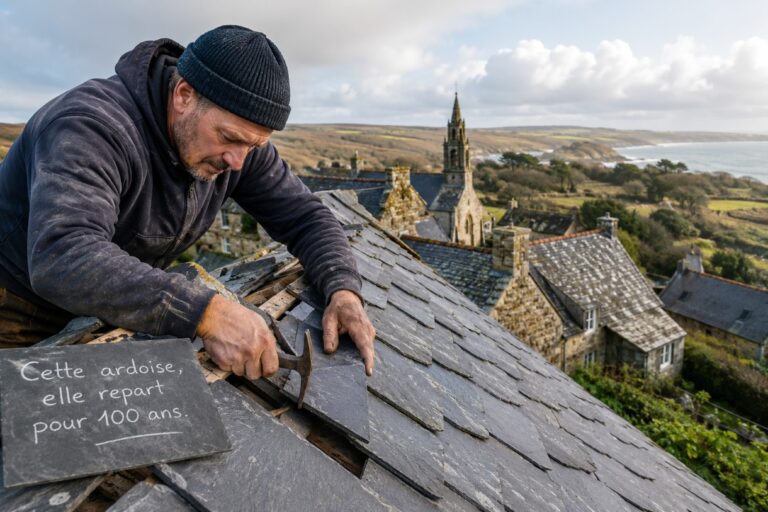
The Craftsmen Repairing a Century-Old Roof They climb, measure, argue and weave the old tiles back into place: roofers like these are the guardians of the cityscape. Their work is subtle and painstaking — repaired where necessary, replaced only when unavoidable — because every slate and every ridge belongs to a history that residents can read from their windows. On a cool morning, the crew gathers on the scaffolding around an old multi-family house. The roof has sheltered generations; time and weather have left their marks: hairline cracks in the mortar, a few slipped tiles, a ridge that no longer fits snugly. The foreman points with a gloved hand, calls out sizes, and a young craftsman balances a tile on his palm as if checking its lineage. Their tools are simple: hammers, chisels, wooden battens. Their skill is to know exactly when a tile can be reused and when it must be discarded. Conservation is more than aesthetics. A roof that breathes keeps the timber dry, protects insulation and prevents mold. Modern materials can offer quick fixes, yet here the team favors traditional techniques and original materials wherever possible. That demands patience: matches must be found among salvaged tiles; mortar mixed to the right consistency; special attention paid to the roof’s profile so rainwater runs off just as it did a hundred years ago. Working at height, on uneven surfaces, with weather as an unpredictable colleague, the roofers rely on routines honed over decades: secure footing, clear signals, an almost wordless coordination when handing heavy tiles. Their apprenticeship is long. Only those who know how slate fractures will be entrusted with a historic roof. City planners and homeowners welcome the care: keeping the original appearance often protects the building’s heritage status and can be more sustainable than wholesale replacement. Still, the job is expensive and time-consuming. Grants and subsidies help, but much depends on craftsmen willing to take on the meticulous labor. When the last ridge is set and the scaffolding comes down, the house settles anew under its old hat. Passersby rarely notice the difference, and that is precisely the point: good restoration is invisible. The roofers climb down, a little tired, a little proud. They have mended more than tiles; they have stitched another piece into the fabric of the city.
In Finistère, a Breton slate roofer is like a goldsmith of the roof. His craftsmanship tells a story of endurance in an…