
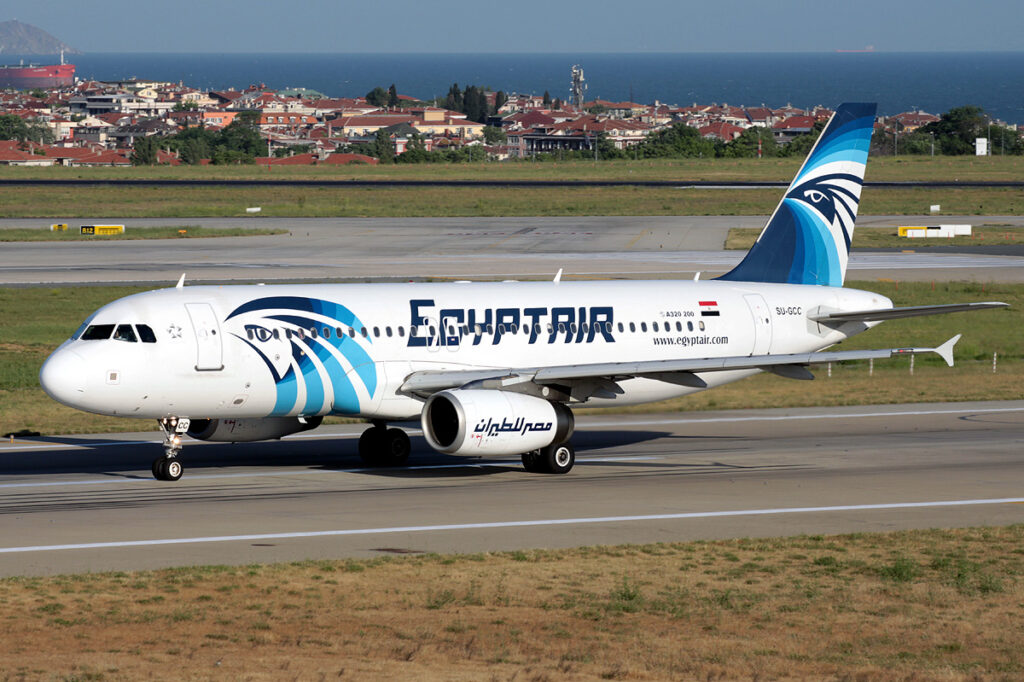
Almost 10 years have passed since the crash of EgyptAir flight MS804, and the French judiciary seems to be about to draw a line under it. According to French media reports, the Paris prosecutor is seeking so-called Non-lieu (a termination of proceedings without a criminal trial). For the families of the 66 victims, this shift is a gut-wrenching shock.
The Airbus A320 crashed over the Mediterranean Sea on May 19, 2016, during its flight from Paris to Cairo. There were no survivors. Among the victims were 15 French nationals. Since then, this incident has haunted not only aviation experts and investigative authorities but especially the families seeking answers and accountability.
Now, there are many signs that those hopes are fading in the fog of the judiciary.
The prosecution claims that it cannot prove negligence equivalent to criminal liability. At most, it sees no more than a possible failure by the deceased crew members. As a result, prosecution against the airline EgyptAir is unlikely. The final decision still rests with the investigating judge, but the prosecutor’s request carries weight.
For the families of the victims, this story sounds like the bitter aftermath many aviation accidents have undergone. Years of expert assessments, technical analyses, conflicting hypotheses — but in the end, no one sits in the defendant’s chair.
The issue of the cause of the fire in the cabin remains particularly serious.
French investigation authorities and the BEA (French Bureau of Aircraft Accident Investigation) have long supported the theory of a fire in the cockpit. The focus was on the possibility of a fire enhanced by the oxygen supply system or oxygen itself. This issue seemed to have been taken seriously internally, as the BEA went so far as to publish a safety study on cockpit fires involving oxygen supply.
In contrast, the Egyptian authorities presented a different view. Their final 2024 report describes an explosion near the forward galley, followed by a fire and the generation of smoke. Two countries, two scenarios, no shared truth — this conflict seems to symbolize the entire incident.
From a judicial perspective, the Non-lieu ruling is understandable. Criminal law requires solid evidence, and speculation is not enough. However, on a human level, this development leaves a cold aftertaste. The longer the proceedings drag on, the more blurred the line often becomes between explanation and exhaustion. Ten years is a long time in the aviation industry.
Nevertheless, many points remain unresolved.
The bereaved now speak of a “shoddy judiciary.” It is a harsh criticism, but one born from years of frustration. After waiting for the truth for nearly a decade, people begin to expect more than just technical expressions or judicial minutiae. In internationally impactful disasters, the impression quickly arises that responsibility slips through the fingers like sand among authorities, countries, and companies.
Perhaps the true tragedy of this incident lies there. Not just in the crash itself, but in the feeling that, in the end, no clear answers remain. There are no verdicts, no trials, and no final punctuation to the conclusion.
Only silence above the Mediterranean.