Back

Nachrichten.fr · June 17, 2026

Tension in the local elections: Paris and Marseille as political seismographs

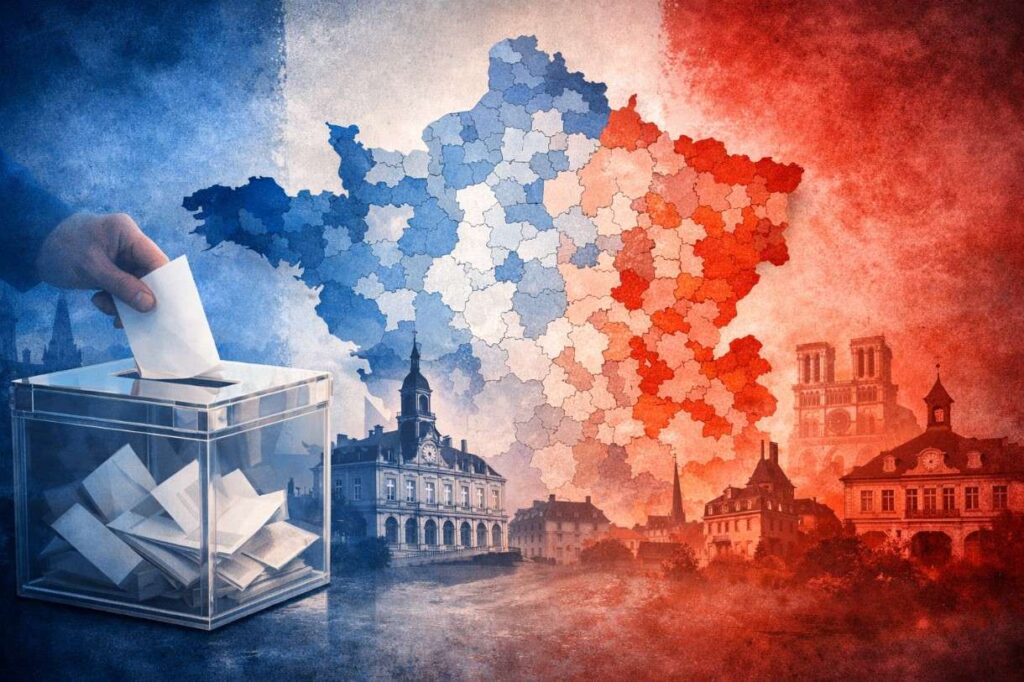
A few days before the second round of the French municipal elections on March 22, 2026, political tension in the country is intensifying. Two cities are exemplary for the tectonic shifts in the party system: Paris and Marseille. In both urban centers, fragmented camps, tactical alliances, and national ambitions collide – with signaling effects far beyond the local level. These elections are seen as a precursor to the 2027 presidential election.


Paris: Fragmentation in the Left Camp – Opportunity for the Right

In the capital, a highly volatile balance of power has emerged. After the first round, the socialist candidate Emmanuel Grégoire is ahead with around 38 percent, but clearly misses an absolute majority. His starting position is anything but comfortable.

Challenger Rachida Dati benefits from a strategic realignment of the center-right, which in Paris has closely intertwined with centrist forces. This alliance gives her camp a cohesion that the left currently lacks.

Central to the dynamics of the runoff is the decision of the La France insoumise candidate, Sophia Chikirou, to remain in the race. Her refusal to support Grégoire leads to a classic three-way contest (“triangulaire”), which particularly splits the left voter potential. This creates a political window that could open the path to power for the right.

Polls suggest a neck-and-neck race, where a few percentage points could make the difference. Such an outcome would be remarkable: Paris has been considered a reliable stronghold of the left for over two decades. A change of power would therefore have not only local but significant symbolic importance.

Furthermore, the Paris election campaign raises a strategic fundamental question for the entire left spectrum: Is an agreement between moderate socialists and the radical left still realistic under the current political and ideological tensions?


Marseille: Fragmentation and Security Debate as Catalysts

The situation in Marseille appears even more unclear. The first round ended almost in a tie between the incumbent mayor Benoît Payan and the candidate of the Rassemblement national, Franck Allisio – both around 35 percent.

This constellation opens up the possibility of a four-way contest (“quadrangulaire”) in the second round, as lists from the radical left as well as the political center could remain in the race alongside the two leading candidates. In such a scenario, vote transfers between the camps gain crucial importance.

The political framework conditions in Marseille favor an escalation. Issues such as organized crime, drug trafficking, and structural deficits in the city administration have shaped the public debate for years. The Rassemblement National deliberately addresses these problems and positions itself as a force of order and security.

At the same time, Marseille has a strong tradition of civil society mobilization and cultural diversity, which has often cushioned radical political shifts so far. Whether these forces will be sufficient this time remains open.

A victory for the Rassemblement National in France’s second-largest city would be equivalent to a political earthquake. It would significantly strengthen the party’s local rooting and further legitimize its ambitions at the national level.


National Dimension: Erosion of Traditional Camps

The developments in Paris and Marseille are not isolated individual cases, but an expression of a deeper transformation of the French party system.

The Rassemblement National is continuously expanding its territorial presence, especially in the south of the country. At the same time, the left-wing camp is increasingly fragmented: Socialists, Greens, and representatives of the radical left pursue different strategic lines, which are increasingly difficult to unite into a common alliance.

The traditional bourgeois right is currently in a phase of reorientation. Targeted cooperations with the political center aim to regain lost ground, while at the same time maintaining a clear distinction from the extreme right – a balancing act that is becoming increasingly difficult with growing political polarization.

This complex situation is further exacerbated by the foreseeable exit of President Emmanuel Macron from the political center. His withdrawal leaves a power vacuum that already shapes the strategic considerations of all political actors.


Decisive Factors of the Runoff

The second round of municipal elections is primarily determined by three variables:

First: short-term alliances. Especially on the left side, tactical withdrawals or calls for support could still shift the balance of power.

Second: voter turnout. In large cities such as Paris and Marseille, differing mobilization of specific voter groups can be decisive.

Third: vote transfers. In a fragmented party system, these are difficult to predict – they depend strongly on local dynamics and individual candidate profiles.


The upcoming run-off elections thus represent more than just a local decision. They exemplify the transition from a traditional left-right divide to a fluid party system shaped by strategic alliances. Paris and Marseille serve as political seismographs: their fluctuations provide clues about tomorrow’s balance of power. The outcome is still uncertain – but it is precisely this uncertainty that makes the current moment one of the most politically charged in recent French history.

Author: P. Tiko