
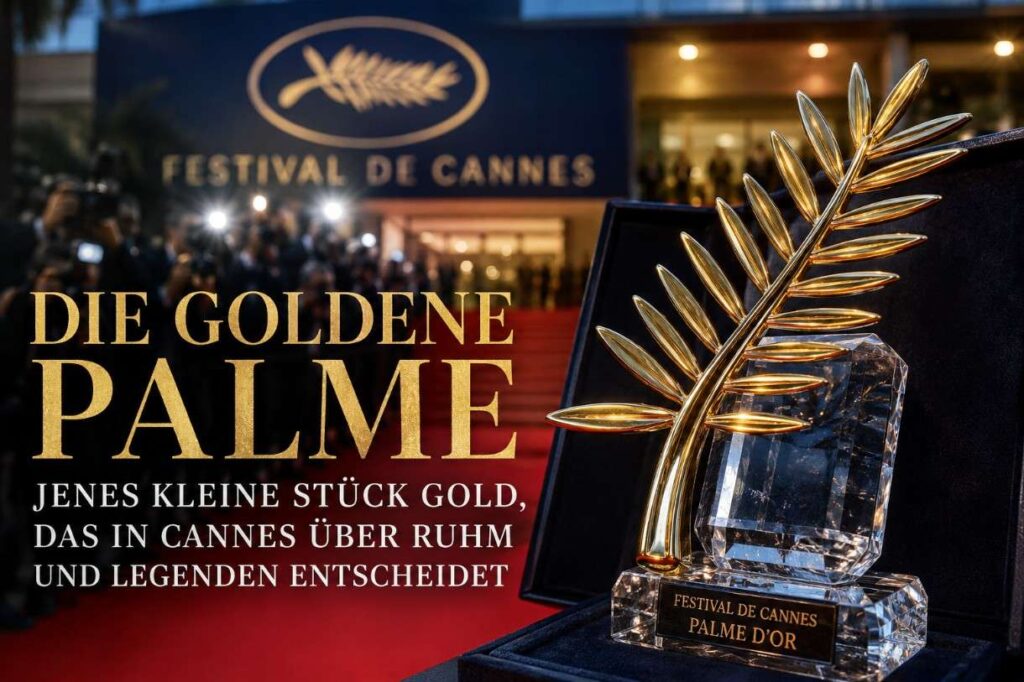
This year, a different atmosphere hangs over the Croisette. There is less popping of champagne, less manufactured glamour, and the old Cannes magic of stars stepping out of black luxury cars while photographers fire their shutters like machine guns is gone. Instead, the 79th festival often feels like a profound reflection on a world in disarray.
And at its center is: Cristian Mungiu.
The Romanian director won the Palme d’Or once again for his film Fjord—his second victory after his brilliant win in 2007 with 4 Months, 3 Weeks and 2 Days. This is not only a moment in film history, but also an astonishingly fitting one for the mood of this peculiar festival. Because Mungiu’s films are never satisfied with simple truths. His characters stumble through moral fog, social tensions, and ideological minefields. Today, Europe seems to be standing in just such a place.
Fjord tells the story of a Romanian-Norwegian mixed family, devout and isolated, with tensions simmering within. When Norway’s child protection services intervene, a conflict unfolds that goes far beyond family matters. Who is protecting whom? Where are the limits of care, and where does cultural intervention begin?
Mungiu presents these questions with his characteristic quiet precision. No dramatic outbursts, no moral pressure, but looks, silences, and small gestures—like cracks in the ice of a fjord, seemingly calm and harmless at first glance, yet capable of suddenly shifting the entire landscape.
The audience in Cannes reacted almost reverently. During the screening, there was that rare festival silence—no coughing, no whispering, no checking phones. The film became a collective experience of concentration. How many places still offer such an experience today?
The entire awards ceremony also seemed like a mirror of the present. Many films focused on war, identity, migration, or political violence. Almost every second competition film was permeated by an atmosphere of deep social tension. Cinema no longer shies away, but confronts and explores deeply.
This was especially evident in the work of Russian director Andrey Zvyagintsev. When he received the Grand Prix for Minotaur, he publicly appealed to Vladimir Putin to end the war in Ukraine. In that moment, the venue no longer resembled a festival palace, but rather a political forum. Some applauded hesitantly, while others immediately stood up.
Cannes suddenly recalled the days when film festivals were still regarded as intellectual battlegrounds—somewhat chaotic, somewhat arrogant, but full of conviction.
The other awards also fit into this picture. Valeska Grisebach received the Jury Prize for Dream Adventure. She tells stories of migration and crime at Europe’s borders, of people who do not truly belong anywhere. The Best Director award was shared by Paweł Pawlikowski and the Spanish duo Los Javis. Even the acting awards jury favored an emphasis on the collective rather than traditional star worship.
It almost felt as if Cannes was deliberately downplaying the myth of the solitary genius in favor of teamwork and shared storytelling. Perhaps that, too, is a symbol of the times.
Of course, there were still iconic moments: Barbra Streisand stepping onto the red carpet, Peter Jackson’s unkempt beard, the flashbulbs on the Croisette. Yet even these scenes carried a hint of melancholy this time. As if the festival had realized that the world outside the cinemas had long since become louder than any red carpet.
That is precisely why Mungiu’s victory seemed only natural.
The Fjord offers no easy answers. The film firmly rejects an obvious division between perpetrators and victims. Instead, it reveals the fragile form of modern democracy, full of contradictions. Inclusion turns into arrogance, protection becomes control, and freedom clashes with moral expectations.
That sounds very theoretical, but in Mungiu’s hands it feels remarkably concrete and real.
One scene is particularly memorable: a Norwegian official sits silently at the family kitchen table while sleet lashes violently against the window outside. No one shouts, no one escalates the conflict, yet the sense of threat in this silence surpasses that of many action films. Well, moments like these can only be created by great auteur cinema.
Perhaps that is exactly what makes The Fjord successful. It is not only about Norway or Romania, but about a Europe that no longer fully understands itself. About a society that constantly discusses values while often forgetting the real complexity of human beings.
Thus, this year’s Cannes did not present an escape from reality, but rather a longing—for direction, empathy, and a language of dialogue beyond ideological trenches.
Can cinema truly take on such a role?
Perhaps cinema cannot do so on its own. But for a few hours in a dark theater, it accomplishes something that political debate often fails to do: it makes people truly begin to see one another with their hearts.
Written by M. Legrand