
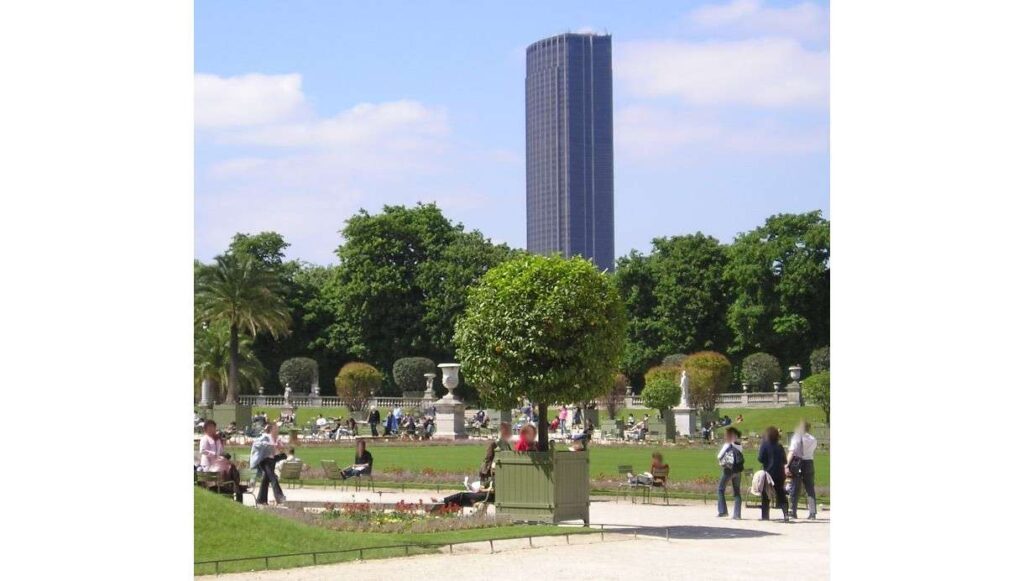
The planned transformation of the Tour Montparnasse has long been considered one of Paris’s most ambitious urban development projects. After years of discussions, delays, and planning, the start of the extensive renovation finally seemed within reach. But now, a conflict within the owners’ community threatens to stall the project again.
At the heart of the dispute are several resolutions concerning the financing and implementation of the renovation, the costs of which are now estimated at around 727 million euros. Several owners, including entrepreneur Xavier Niel, have initiated legal action against the owners’ community. What at first glance appears to be a technical dispute over spaces and property rights actually touches on the fundamental question of every major project: Who decides the future of a building, who bears the costs, and who later benefits from the increase in value?
A particularly contentious area is a part of the building on the 57th floor. This space plays an important role in the planned architectural redesign. If no agreement is reached, essential elements of the project could be jeopardized.
The renovation was actually supposed to mark the end of a decades-long debate. Opened in 1973, the Tour Montparnasse remains one of the most controversial buildings in the French capital. For some, it is a symbol of modern architecture, for many others a dark eyesore in the Paris cityscape.
The architecture firm Nouvelle AOM was awarded the contract for the tower’s redesign back in 2017. Planned is a comprehensive modernization with brighter facades, improved energy efficiency, and a stronger opening of the building toward the city. The Tour is intended to no longer appear as a sealed-off office tower but rather to integrate more closely with the surrounding neighborhood.
At the same time, the city of Paris is pursuing a broad upgrade of the entire Maine-Montparnasse district. More green spaces, wider pedestrian areas, and better connections between different city districts aim to make the area more attractive.
But the reality of large construction projects reveals its complicated side once again. Divergent owner interests, rising construction costs, legal disputes, and high technical demands complicate the implementation. Although the originally planned evacuation of the building at the end of March 2026 marked an important milestone, the actual start of construction is increasingly being delayed. Observers now expect completion more around the year 2030.
The Montparnasse case thus exemplifies the challenges of modern urban development. At the very moment when the renovation seems closer than ever before, its greatest weakness becomes apparent: It is not the architecture that determines success but the ability of those involved to prioritize common interests over individual ones. For Paris, it is no longer just about a skyscraper but about whether a vision for the city’s future can truly become reality.
By C. Hatty