
With harsh prison sentences, the Dunkirk criminal court has sentenced a smuggling network accused of organizing numerous illegal crossings of the English Channel between 2022 and 2024. Six men from Iraq, Syria, and Iran were convicted after investigators attributed their participation to a total of 69 crossing attempts. 36 of these reportedly succeeded in reaching the British coasts.
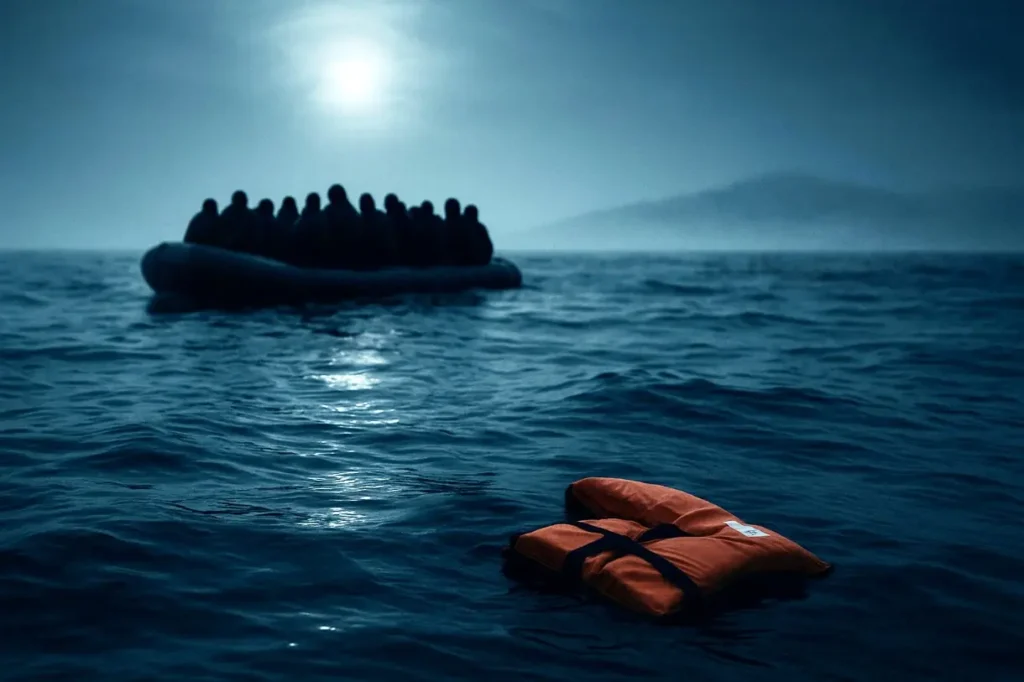
The responsibility is particularly serious regarding two fatal accidents. Three of the accused were also charged with involuntary manslaughter. In one case, a seven-year-old girl died; in another, a 20-year-old woman suffocated in an overcrowded inflatable boat. These tragedies illustrate the risks of a route that has become the last hope for many migrants.
The investigation files depict a professionally organized system. The smugglers advertised their services in temporary camps on the northern coast of France, recruited new clients, organized transport routes, procured boats, and coordinated night departures. They promised those fleeing safe crossings – for substantial sums. In reality, the dangers only increased. To maximize profits, the boats were increasingly overloaded, often well beyond their actual capacity.
The English Channel is now among the most dangerous migratory routes in Western Europe. Despite intensive cooperation between France and the United Kingdom and increased surveillance, the number of crossings has been rising for years. The smugglers continuously adapt their methods and react flexibly to new controls. This creates a cat-and-mouse game that has so far produced no lasting solution.
The trial in Dunkirk therefore raises questions that go far beyond the guilt of the accused. Of course, those who exploit, deceive, and endanger the lives of protection seekers must be held accountable. The verdicts send an important message against criminal networks.
However, the real challenge remains.
As long as thousands of migrants remain stuck in the coastal areas around Calais, Dunkirk, and Loon-Plage without realistic prospects, crossing to the United Kingdom will remain for many an assumed way out. The English Channel will then not appear as a dangerous border but as the last door to a hoped-for new beginning.
That is the whole dilemma. Criminal proceedings can punish the perpetrators. However, they do not eliminate the causes on which the smugglers’ trade is based. Where despair and the lack of legal avenues prevail, a market is created that others are ready to serve. The question is therefore not only how to stop the smugglers, but also how to prevent their services from even being requested.
Andreas M. Brucker