
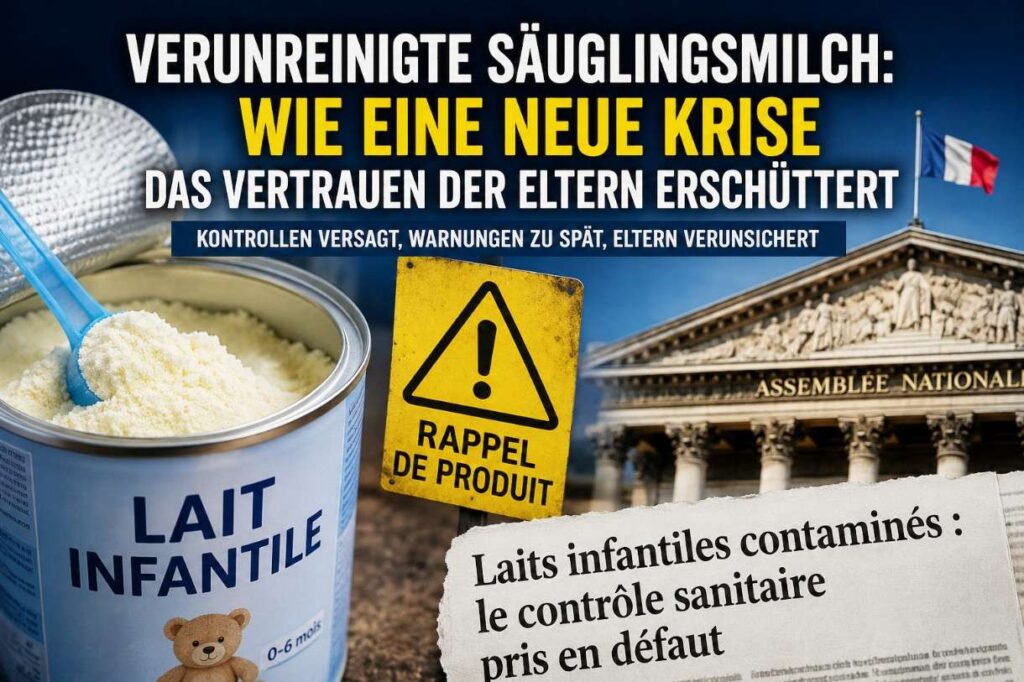
A bottle of milk is considered a symbol of safety for many parents. Especially in the first months of life, families rely on the fact that baby food is strictly controlled, cleanly produced, and safe for health. The current affair about contaminated infant formula is hitting France hard. The latest report from a parliamentary inquiry paints an alarming picture: inadequate controls, sluggish responses, and an information policy that has caused sheer horror among many parents.
The crisis was triggered at the end of 2025 by a large-scale recall from Nestlé. In numerous countries, batches of infant formula had to be withdrawn from the market after traces of the dangerous toxin substance cereulide were detected. The toxin can cause severe vomiting—unpleasant for adults, potentially life-threatening for babies just a few months old.
But it did not stop there.
Soon after, other major manufacturers such as Danone and Lactalis also came under pressure. Further recalls followed, supermarket shelves were cleared out, and parents stood helplessly in front of half-empty shelves, wondering: Which products are still safe? Some families checked the batch numbers on milk cans at night, much like others once checked lottery numbers. Only this time, it was not about luck but their children’s health.
The newly published report from the French National Assembly does not spare criticism. The deputies speak of significant weaknesses among both manufacturers and state authorities. Above all, the delays in warnings and recalls cause head shaking. Because with products for infants, every hour counts.
The affair evokes unpleasant memories of the Lactalis scandal in 2017. Even then, contaminated baby food made headlines worldwide. Politicians promised stricter controls, better transparency, and faster warning systems. Nearly a decade later, the same problems resurface—as an old shadow that never quite vanished.
At the center of the criticism is the French control system itself. Large parts of food safety rely on so-called self-monitoring by manufacturers. Companies initially test their products themselves and then report irregularities to authorities. If this flow of information does not work smoothly, the entire safety net falters.
That seems to be exactly what happened this time.
Particularly sensitive remains the question of when individual companies first had indications of possible contaminations—and why some recalls were only made public days later. In crisis situations of this kind, there is a quick impression that economic interests might outweigh maximum caution. Even this suspicion alone is enough to destroy trust.
Because trust in the food industry is like thin glass: building it takes years, one single crack is enough—and suddenly everything seems fragile.
Politically, pressure on the government is now growing. The inquiry commission is demanding stricter independent controls, clearer limit values, and faster alarm mechanisms. Additionally, parents should be informed more directly in the future rather than learning important information only through media reports or social networks. It was precisely in these channels where rumors and half-truths spread rapidly during the crisis. At times, some parents no longer knew which products they could even trust.
The food industry faces an uncomfortable truth: for infant nutrition, technical minimum standards are not enough. Parents expect absolute diligence—without gray zones, without delays, and without tactical weighing.
That costs money.
But the price of lost trust often ends up being much higher than a precautionary recall. Companies that react too late risk not only billions in losses but also damaging their reputation for years. Many consumers simply do not forget such things. Especially not when babies are involved.
The parliamentary inquiry therefore marks by no means the end of the affair. Rather, it marks the beginning of a broader debate about responsibility, transparency, and state control. Because in the end, there remains a simple realization, almost banal in sound yet all the more significant: parents must be able to rely on baby food being safe. Without doubt. Without ulterior motives. Without fear during the nightly bottle.
By C. Hatty