
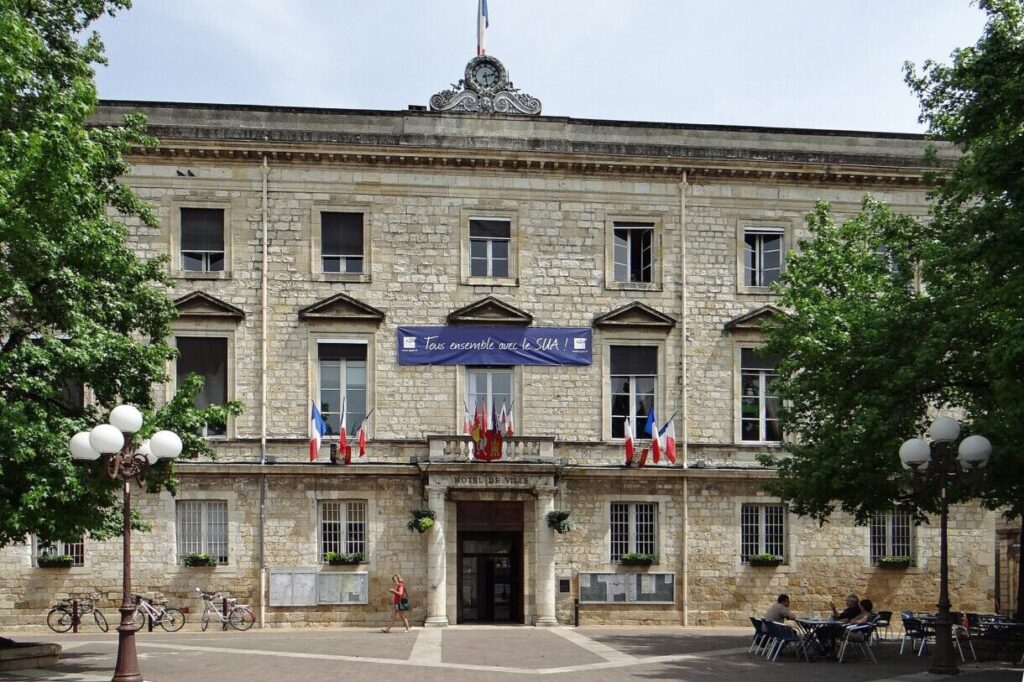
The southern French city of Agen is experiencing days that many residents will not soon forget. Anonymous threatening letters, racist messages, and bullet casings — a mix that not only provokes outrage but also exposes deep-rooted fears. Especially the city’s Muslim community now feels directly threatened. “We are afraid for our family members,” say representatives of the mosque openly. Words that hang heavily in the air.
The affair was initially caused by death threats to Mayor Laurent Bruneau. But in the meantime, the case is expanding further. The mosque of Agen, journalists, and even the local police station have received similar letters. They were signed with the same mysterious name: “Le Ragondin de Garonne” — a macabre reference to the nutria that live along the Garonne. Almost grotesque. And precisely because of that, all the more disturbing.
The letters contained shotgun shells and concrete threats. No longer a bad joke, no silly internet talk. But tangible intimidation. That is making many people in Agen very upset. Especially for the coming Eid al-Adha feast, nervousness is growing. Families are now wondering whether the path to the mosque is still truly safe. Such thoughts change a city.
Agen is actually not considered a French hotspot. About 30,000 inhabitants, quiet streets, lots of provincial daily life. But it is precisely there that social tensions often become very clear. When hate suddenly ends up in mailboxes, it has a more direct effect than any heated TV debate from Paris.
The case also affects France in an already heated atmosphere. The country has been discussing violence against mayors, attacks on religious institutions, and the increasingly aggressive tone in public spaces for months. Mayors are now seen in many places as the primary target of social anger. At the same time, fear of Islamophobia and daily threats is growing among Muslim citizens. At the end of April, anti-Islamic graffiti appeared in Agen — precisely during a meeting of different religious communities. A bitter symbol.
The reaction on site remains remarkable.
The mayor and representatives of the mosque demonstratively went out together. No mutual accusations, no political theater. Instead, a joint statement against hate and intimidation. One of the central sentences read: “Racism is not an opinion, but a crime.”
That sounds obvious at first glance. In times of increasing polarization, this obviousness suddenly gains weight.
Many municipalities in France are currently struggling with a sense of creeping uncertainty. Mayors receive threats, teachers are under pressure, religious communities feel watched or attacked. The great fear behind it: that words will eventually turn into actions. You now often hear that phrase in France — almost like a nervous mantra.
Agen thus suddenly seems like a small reflection of the French Republic. A city caught between solidarity and mistrust, between republican ideals and very real fears. The local solidarity still holds. But the nervousness is growing. And that makes the affair so urgent.
Because sometimes a few letters and a few patterns are enough to make an entire city feel that something has gone out of balance.
By C. Hatty