
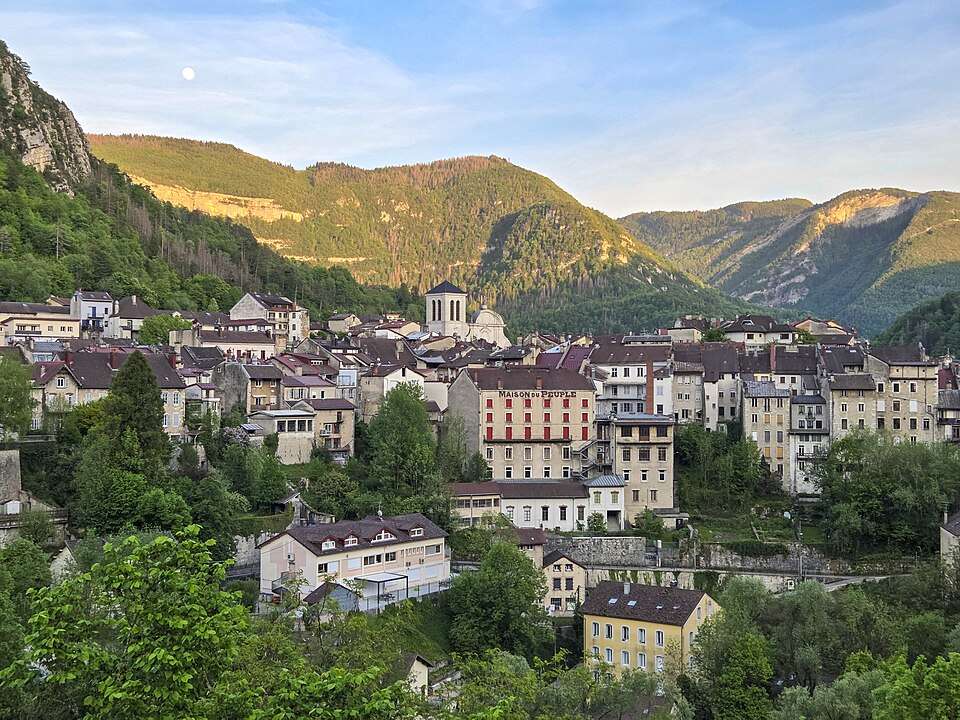
Saint-Claude, deeply nestled in the forested valleys of the Jura, was for decades a symbol of French industrial history. The town lived from its workshops, factories for pipes and plastic products, diamond cutting, and numerous suppliers to the automotive industry. Work here was more than just an income – it gave identity, cohesion, and pride.
Today, a different phrase shapes the mood of many residents: “We pay taxes like everyone else.” Behind this is a simple but urgent question: Why does it seem that less and less state support is reaching this very place?
The developments of recent years provide part of the answer. Within a decade and a half, Saint-Claude lost more than a quarter of its population. Where around 12,000 people once lived, the town now counts only about 8,700 residents. Especially the financial crisis of 2008 hit the industrial base hard. Companies closed, jobs disappeared, young people moved away.
With the population decline came decreasing revenues. At the same time, state subsidies were reduced. For a municipality already struggling with structural challenges, this was like a double blow. Less money meant less room for manoeuvre – and fewer options to stop the downward trend.
Anyone walking through Saint-Claude quickly recognizes the consequences. Vacant apartments line many streets. Shop windows of former stores recall better times. In the town center, traders struggle for customers while discussions about parking spaces and accessibility repeatedly flare up. These are not spectacular crisis symptoms but many small signs of a slow decline.
Particularly painful for many residents was the closure of the maternity ward in 2018. Administratively, it was a decision in healthcare. For the people on site, it had a far greater significance. The maternity ward stood for proximity, safety, and public services. Its disappearance became a symbol of a state gradually withdrawing from rural regions.
That is exactly where the core of the problem lies.
Debates in France often focus on large metropolises or social tensions in suburbs. Cities like Saint-Claude, however, often fall out of view. Yet many smaller municipalities in former industrial regions share similar experiences: declining populations, dwindling public services, and worries about barely being recognized politically anymore.
The resulting dissatisfaction is not solely economic. It touches on the understanding of democracy and equality. Those who pay taxes expect not only obligations but also services in return. Doctors, schools, functioning transport links, cultural offerings, and accessible administrations are part of this unspoken contract between state and society for many citizens.
When these services gradually disappear, the impression of a growing distance arises. People still feel part of the Republic but doubt whether their region still counts among its priorities.
Saint-Claude therefore represents many places in France. The town reminds us that equality is not only based on laws and forms. It must remain tangible in everyday life – on the streets, in schools, in hospitals, and in the small towns that form the backbone of the country.
Author: C.H.