
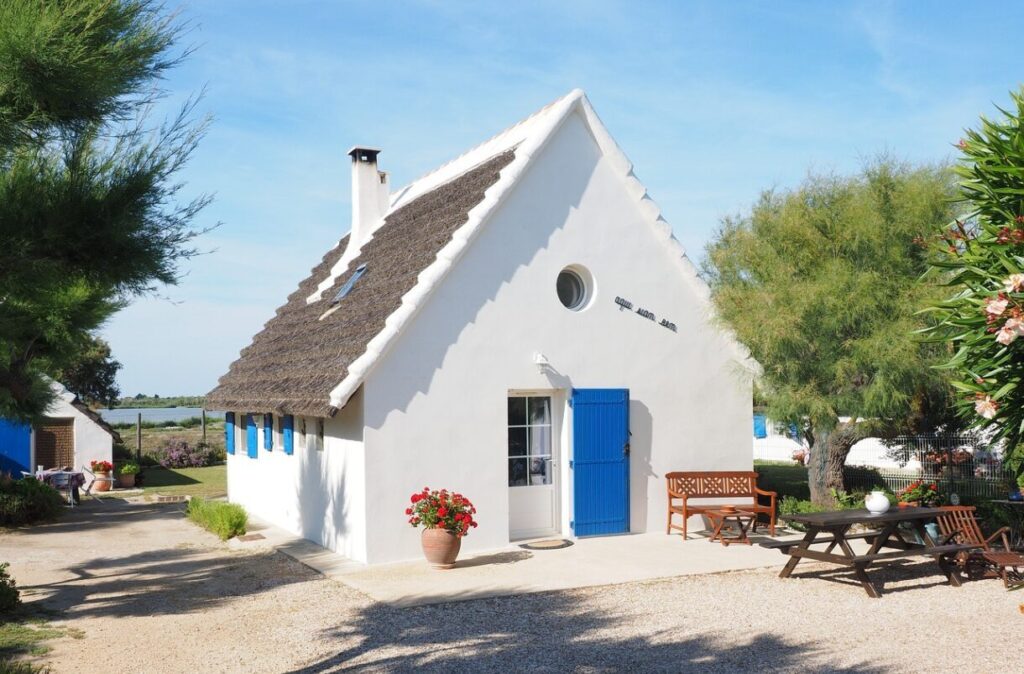
On Brittany’s Atlantic coast a remarkable change is taking place. In communes such as La Trinité-sur-Mer, Carnac or Saint-Philibert, owners of second homes are increasingly opening their houses to locals — at least outside the holiday season. What at first appears to be pragmatic neighborly help points to a deeper problem affecting many European coastal regions: tourist appeal is increasingly threatening the social and demographic stability of the places themselves.
In parts of the Morbihan, up to 70 percent of the housing stock now consists of second homes. While the summer months fill the coastal towns with life, consumption and tourist dynamism, many places return to an almost eerie emptiness in winter. Closed shutters, reduced opening hours, declining pupil numbers and a shrinking club life then characterize everyday life. Young families and public-sector employees are particularly affected, as they can hardly afford to live close to their workplaces anymore.
A Model Between Solidarity and Housing Shortage
Against this background, the initiative “Les Volets ouverts” emerged — in German roughly “The Open Shutters.” The principle is simple: owners of holiday homes make their properties available to families from the region during their absence. The residents pay a moderate rent and commit to vacating the houses during holiday periods or in the summer.
The model consciously differs from traditional tenancy arrangements. It is based less on maximum returns than on mutual trust and a certain common spirit. For many families, however, this still makes a crucial difference. In numerous coastal communes, property prices have nearly doubled over the past ten years. The pressure has increased especially since the COVID pandemic, when many wealthier city dwellers sought second homes in scenic regions.
The result is a gradual displacement of those professional groups that are indispensable to the functioning of local infrastructure: care workers, teachers, retail employees, municipal staff or seasonal workers. Many now commute from inland to the coast because housing nearby is hardly affordable.
The Dark Side of Tourist Success
Brittany is by no means alone with this problem. Similar developments are visible along the French Atlantic coast, in the Basque country, on Corsica or parts of the Mediterranean coast. Spain, Portugal and Italy also struggle with the displacement of local populations in tourist-attractive regions.
But in Brittany the debate takes on a particular cultural dimension. Many coastal towns define their identity through long-established local communities, Breton traditions and a strong club culture. When entire streets lie deserted outside the holiday months, not only the economic structure changes, but also the social fabric.
In some communes the number of second homes now exceeds that of primary residences. Critics therefore speak of a “musealization” of the coastal towns: the villages remain outwardly intact and picturesque, but gradually lose their everyday vitality. Schools close for lack of pupils, bakeries and small shops no longer find year-round customers, and access to medical care becomes more difficult.
Several mayors now openly warn of a “mur du vieillissement” — a demographic wall of aging. Where young families are absent, the average age rises rapidly. The communes risk losing their economic and social dynamism in the long term.
Second Homes as a Political Flashpoint
The discussion about second homes has long since become a political flashpoint. French municipalities now have instruments to combat the shortage of housing. These include higher taxes on second homes or stricter regulations on holiday rentals.
However, such measures quickly meet limits. Tourism remains a central economic factor for many coastal regions. Many communes benefit significantly from wealthy second-home owners who support local businesses, renovate properties and bring purchasing power to the region.
Moreover, property rights are politically sensitive in France. A blanket approach against second homes would be difficult to implement legally and socially. That is precisely why voluntary models like “Les Volets ouverts” are gaining importance. They avoid confrontation and instead rely on cooperation between owners and local residents.
Noteworthy is the change in mentality among some owners. Several participants in the initiative openly say they no longer want to contribute to turning Breton villages into pure holiday backdrops. Behind this stance is also the recognition that Brittany’s appeal stems from its authenticity — from lively harbors, open schools, local markets and functioning village communities.
A European Structural Problem
The development points to a broader European trend. In many tourist regions three dynamics collide today: rising property prices, demographic change and the increasing mobility of wealthier population groups.
Digital forms of work amplify this process. Those who can work permanently from home more often choose attractive coastal regions — often with incomes well above the local average. For the original population, this creates massive competitive pressure on the housing market.
At the same time, the function of housing itself is changing. Properties no longer serve only as a place to live but increasingly as capital investments, holiday assets or second residences. This creates a structural dilemma for communes: houses may exist physically, but they stand empty for large parts of the year.
Brittany’s response so far has been more pragmatic than ideological. Instead of radical bans, local solutions are emerging that try to reconcile tourist use and permanent settlement. Whether such models will be sufficient in the long run remains open, however.
For the underlying trend is likely to continue. Coastal regions with high quality of life will remain in demand — not only in France but across Europe. The crucial question therefore increasingly is: how can economic success be reconciled with social stability?
Brittany’s communes have not yet provided a definitive answer. But initiatives like “Les Volets ouverts” at least show that awareness is changing. More and more owners seem to recognize that attractive regions do not live solely from landscapes, but from people who live and work there year-round, raise children and organize community life.
The future of Brittany may therefore be decided less on its beaches than on whether its villages remain lively places outside the holiday season.
Author: P. Tiko