
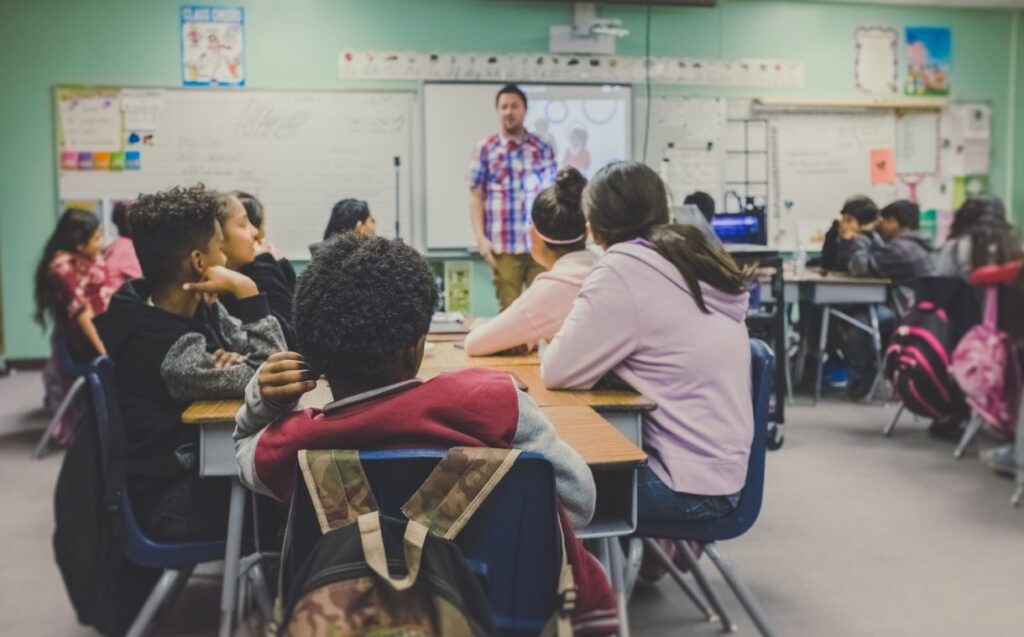
In France, about 75,000 young people leave the school system each year without a graduation certificate. Behind this number are not just abstract statistics but unstable backgrounds of youths with anxiety disorders, depression, family conflicts, or a feeling of having completely failed in the traditional school system. It is precisely at this point that small alternative high schools called “Micro-lycées” emerge — these small schools within the public education system aim to open a second educational path for young people.
The idea started in the 1990s in Sénart, on the outskirts of Paris. At that time, teachers wanted to create a place where students who dropped out would not be excluded again but would be gradually helped to regain learning, daily life skills, and confidence. Today, there are several similar “Structures de retour à l’école” institutions in France.
The principle is somewhat simple but rather remarkable because of that: small learning groups, personalized guidance, flexible operations, and much more personal relationships between teachers and students. Many of the young people here are between 16 and 25 years old, having experienced school phobia, family crises, mental burdens, and deep mistrust of the traditional lycée system.
Schools where education is received without stigma
Micro lycées are not considered simplified schools. The curriculum is the same as that of a regular high school, and the goal is also to obtain the Baccalauréat, the French high school graduation diploma. The difference lies more in the educational approach than in the content.
Teachers often play the role of companions rather than traditional authorities, treat assessments less dramatically, and expand opportunities for dialogue. Many institutions apply a tutor system or individual learning plans, prioritizing the stabilization of youths rather than continuous selection.
This aspect is particularly notable in France. The French education system traditionally has a strong centralized, performance-oriented, hierarchical structure, which has long cultivated academic elites while also having many youths who drop out early. Students who experience failure often perceive it as a permanent stigma.
Micro lycées focus precisely on overcoming this stigma. Their core educational philosophy is not tolerance but providing second chances.
The Quiet Crisis of Youth
The importance of such institutions has increased in recent years. Educators and adolescent psychologists have long observed a rise in youth mental health issues, and this trend has been further intensified by the pandemic. Isolation, performance pressure, and anxiety about the future continue to have an impact today.
Many students report experiencing not only academic failure but also emotional alienation in the traditional school system. Large classes, standardized assessments, and intense competitive pressure cause some youths to feel a constant overload. When this leads to long-term absenteeism or failing exams, they fall into a vicious cycle of shame and withdrawal.
Therefore, statements from students originating from micro-lesse schools are often emotionally striking. They talk about being taken seriously rather than just improving grades, teachers listening to them, mistakes not being the final judgment, and learning regaining meaning again.
In a society that closely links education with social advancement, these aspects are never trivial. While French schools have traditionally been established as a model of republican integration, the reality that tens of thousands of students leave school every year without diplomas is not only a personal issue but also a social problem.
Small groups as a counter to large-scale anonymity
The experience of micro-lycées reveals an uncomfortable contradiction: the long-known success factors in education — small groups, stable relationships, individualized guidance, ensuring time for conversations — are usually difficult to implement in conventional schools.
French schools operate in many places with large classes, strict curricula, and strong exam pressure. Teachers are under time constraints, administrative tasks increase, and individual guidance is often considered a luxury. Therefore, micro-lycées function as a model almost opposite to institutional logic.
However, their existence is not always accepted. Critics argue that such structures are expensive and applicable only to small groups. In fact, more personnel, psychological support, and intensive educational accompaniment are required.
On the other hand, supporters counter that the social costs caused by failure are much greater: youth unemployment, social isolation, mental illness, long-term welfare dependence all cause not only personal suffering but also substantial economic burden.
A Laboratory for Future Schools
The true significance of micro-lycées goes beyond merely supporting individual students at risk of dropping out. They function like an educational laboratory for more fundamental questions: how should schools be organized so that fewer young people disengage from the system from the start?
This discussion is not unique to France. Many European countries are debating issues of school stress, mental burdens, and unequal opportunities. The French experience clearly shows: motivation does not arise from pressure alone. Only when young people experience trust, time, and personal attention does motivation grow.
This does not mean that achievement is unimportant. Even in micro-lycées, some students drop out again, and not everyone attains the baccalaureate. Educators frankly acknowledge these limits. Nevertheless, many institutions demonstrate remarkable success rates among students remaining until the final graduation exams.
Perhaps the most important message these schools convey is not alternative teaching methods but a different kind of human relationship. Here, young people are primarily respected not as performance objects but as individuals with wounds, crises, and potential for growth.
This is a quiet challenge to the traditional educational system. The fundamental question ultimately is: why must young people often experience complete failure to receive individual attention?
France’s micro-lycées do not offer a simple answer, but they show that schools can also be run differently — with less anonymity, without humiliation, and in a more humane way.
Some adolescents need a second chance rather than stricter rules.