
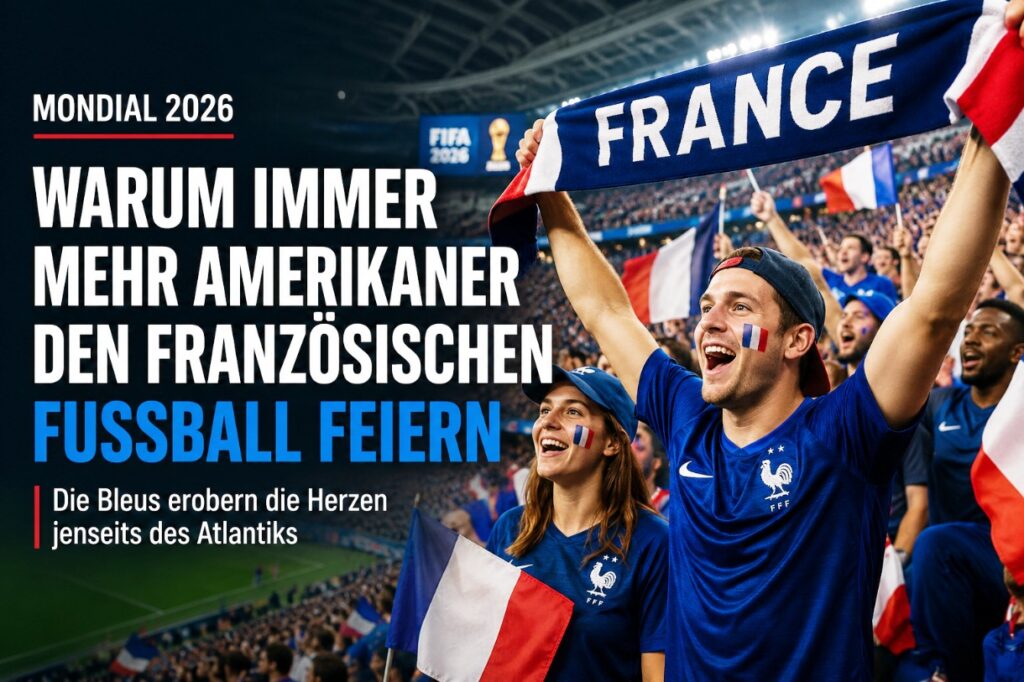
Only a few years ago, soccer played only a minor role in American sports. Baseball, American football, basketball and ice hockey dominated the headlines. With the 2026 World Cup, which is being jointly hosted by the USA, Canada and Mexico, the picture has, however, changed noticeably. A new phenomenon is apparent in the stadiums: more and more American fans are wearing the French national team jersey and openly declaring their support for the “Bleus” — at least when their own national team is not on the pitch.
Whether in New York, Los Angeles, Miami or Dallas: French flags, blue jerseys and even French chants have become a familiar sight. Many Americans openly explain why France has become their favorite team.
Above all, the style of play excites. The French national team stands for technical football, high speed and creative solutions. Individual stars regularly shine, but they never lose sight of team play. It is precisely this mix that fascinates many viewers who have only discovered international football in recent years.
“With France, something is always happening,” describes a fan from Chicago in summing up his enthusiasm. Sometimes the team impresses with tactical discipline, sometimes with spectacular individual actions. It is this balance between efficiency and entertainment that makes the “Bleus” particularly attractive to many viewers.
Added to this is the enormous recognition of the French players. Names like Kylian Mbappé, Ousmane Dembélé, Aurélien Tchouaméni and Mike Maignan have long become fixtures in the USA. Through streaming services and the extensive broadcast coverage of Europe’s top leagues, millions of Americans now follow Champions League matches and major European competitions week after week. This strengthens the connection to international top teams — and to the French national team.
The 2018 World Cup title still resonates today. That team impressed with its youth, dynamism and decisiveness. Since then, France has consistently been among the world’s elite and regularly delivers strong performances at major tournaments. This consistency builds trust among new football fans who appreciate teams that are not only successful in the short term.
Another aspect goes beyond sport. Many American supporters see the French national team as a mirror of social diversity. Players of very different backgrounds wear the national jersey together and pursue the same goal. In a country like the United States, where cultural diversity in professional sports has been taken for granted for decades, this image meets with broad approval. Political debates about this topic that take place in France often play only a subordinate role for many fans.
France’s youth development also contributes to its good reputation. The country’s training centers enjoy an excellent international reputation and produce talents year after year who later end up at Europe’s top clubs. This continuous development underlines the high standing of French football and simultaneously strengthens the national team’s international reputation.
Not least, the fascination with France itself plays a role. For many Americans, the country is associated with good food, culture, fashion, history and a particular way of life. Football now complements this image in a convincing way. For some fans, wearing the blue jersey even symbolizes their connection to France as a whole.
The 2026 World Cup clearly shows that the French national team has long since become more than just a country’s team. It has developed into a globally popular football brand. In the streets of the host cities, blue jerseys now belong as naturally to the cityscape as those from Brazil, Argentina or the USA. As football continues to gain importance in North America, the hearts of many American fans now beat surprisingly often — entirely in blue.
Author: C.H.