
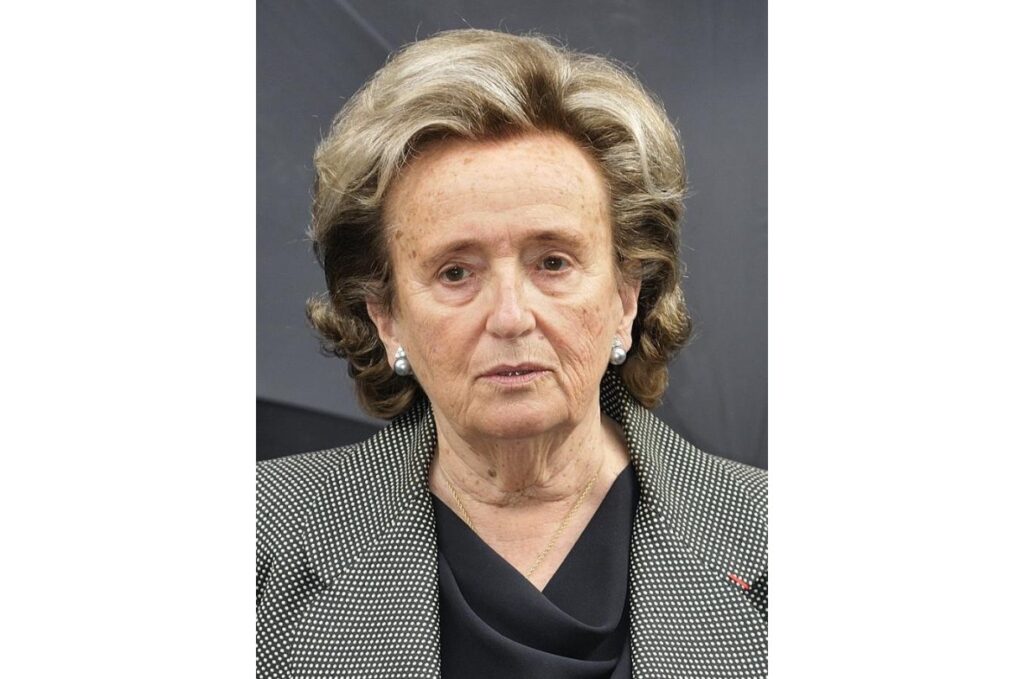
The death of Bernadette Chirac at the age of 93 triggers sympathy in France far beyond political divides. With her passes a public figure who shaped French politics for decades – initially alongside her husband Jacques Chirac, but later also as an independent political figure. Her passing symbolically marks the end of a generation that decisively helped shape the history of the Fifth Republic.
More Than a President’s Wife
In French political history, spouses of heads of state were often reduced to representative roles. Bernadette Chirac was a remarkable exception. Long before her husband moved into the Élysée Palace in 1995, she had already built her own political base.
For more than three decades, she was active in local and regional politics in Corrèze. In a political culture long dominated by men, she succeeded in establishing herself as an elected official permanently. Thus, she was one of the few French Première Dames who possessed independent political legitimacy.
Her political career was characterized by persistence and local roots. While Jacques Chirac enjoyed national and international attention, Bernadette Chirac maintained direct contact with the citizens of her home region. This proximity to the population contributed significantly to her popularity.
The Discreet Power Behind Jacques Chirac
For decades, Bernadette Chirac was considered one of the most influential women in French politics. Behind the scenes, she played an important role in her husband’s strategic decisions and was known for her clear assessments.
Political companions often described her as more determined and direct than Jacques Chirac, who was often perceived as down-to-earth and pragmatic. Her loyalty to her husband was unwavering, yet she did not hesitate to publicly state her own positions.
Especially during her husband’s presidency from 1995 to 2007, she became a fixed presence in political Paris. Unlike many predecessors, she actively used her public role and knew how to mobilize media attention for social causes.
The Legacy of “Pièces Jaunes”
Her engagement with the foundation “Pièces Jaunes” remains particularly enduring. The initiative collected donations over decades to improve conditions in French children’s hospitals.
What originally began as a charity campaign developed into one of France’s best-known charitable actions. Millions of citizens regularly participated in the collection drives. The funds enabled the financing of common rooms for families, medical equipment, and numerous projects to improve the hospital experience for children.
This commitment gave Bernadette Chirac a profile that found recognition far beyond party-political boundaries. For many French people, she was less the wife of a president than the face of one of the country’s most successful social initiatives.
A Representative of a Political Generation
Bernadette Chirac was born in Paris in 1933 as Bernadette Chodron de Courcel. She came from a tradition-conscious bourgeois milieu and experienced the German occupation as a child as well as the reconstruction of France after World War II.
Her political socialization took place during the founding of the Fifth Republic under Charles de Gaulle. Together with Jacques Chirac, she embodied the generation of French politicians who accompanied France’s rise to a modern European middle power.
Her husband’s career led from Prime Minister through Mayor of Paris to the highest state office. During these decades, Bernadette Chirac remained a constant companion and at the same time an independent political actor.
With her death, a historical chapter closes. The personalities who shaped French politics in the last decades of the 20th century are increasingly stepping off the stage. Bernadette Chirac was one of the last still living symbolic figures of this era.
France loses not only a former Première Dame but a woman who combined political responsibility, social engagement, and personal steadfastness in an unusual way. Her life path also reflects the development of the role of women in French politics – from supportive companion to independent actor in public life.
Author: P. Tiko