
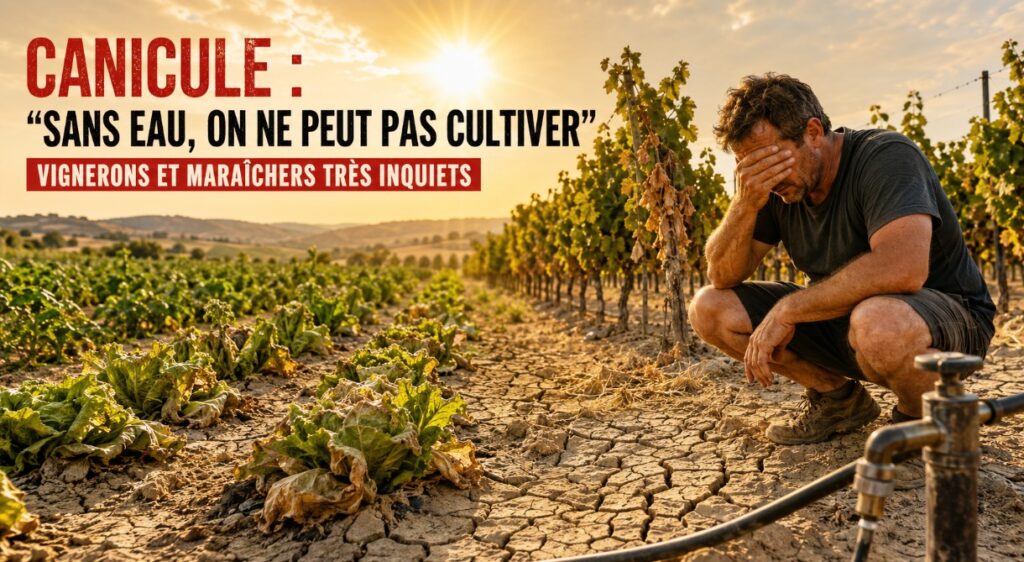
Summer is not being kind to French agriculture. No sooner has one heatwave passed than the next is already on the way. Temperatures above 35 degrees, parched soils and absent rainfall shape everyday life in many places. For winegrowers, vegetable farmers and fruit growers, this has long ceased to feel like an exception. It is the new reality – and it is demanding everything from farms.
“Without water, we cannot grow anything.” This sentence is now heard on many farms. It sounds simple, but it describes the situation more accurately than any statistic. Water is the basis of every harvest. When it is missing for weeks on end, even experienced farmers reach their limits.
The trend is particularly evident in the vineyards. For centuries, grapevines were considered undemanding plants that coped remarkably well with drought. But they too are now reaching their stress limits. Leaves change color early, grapes get sunburned, and entire vines suffer from severe water shortages.
For winegrowers, this begins a race against time. If the berries remain small, yields automatically decline. At the same time, the ripening process changes. The grape harvest now begins weeks earlier in many places than it did just a few decades ago. What was once firmly marked on the calendar is now increasingly determined by weather extremes.
Some winegrowers still remember summers when rain was almost taken for granted. Today, everyone looks to the sky first thing in the morning. Will a cloud finally appear? Or will the sky remain cloudless once again?
Vineyards are not the only ones groaning under the heat.
Vegetable growers are under even greater pressure. Lettuce, tomatoes, cucumbers and zucchini need regular water. Just a few days without sufficient moisture are enough to halt growth. Strong plants can turn into wilted crops in a very short time.
It is precisely then that irrigation restrictions take effect in many regions. Rivers carry less water, reserves are shrinking, and authorities limit withdrawals. This creates a difficult balancing act for farms. The plants need water, but the tap is often only partly open.
Some farmers are already responding. They are reducing the area they cultivate or turning to crops that can better withstand longer dry spells. Others are investing in modern irrigation systems that use every drop as efficiently as possible. But that costs a great deal of money – and no one knows whether the next heatwave will be even more severe.
The economic consequences hit many family-run farms hard. Every harvest represents months of work, planning and investment. Seeds, machinery, energy and staff all generate costs, regardless of whether enough is ultimately harvested. If the harvest is smaller, the calculation quickly falls out of balance.
That is why almost every discussion now revolves around the same question: How can the water supply be secured for the long term?
Agricultural associations advocate additional storage basins to collect rainwater from the wetter winter months. During dry summers, this water would then be available for irrigation. For many farms, this sounds like a sensible solution.
But this is exactly where conflict arises. Environmental groups warn against interventions in fragile ecosystems. They fear effects on rivers, wetlands and groundwater. Both sides pursue understandable goals. One wants to protect nature; the other wants to safeguard its livelihood.
There is no simple answer.
At the same time, farmers have long been working on new approaches. Test plots are being created in vineyards with grape varieties that tolerate heat better. Others are changing how they prune vines so that the leaves provide more shade for the grapes. Vegetable growers cover their soil with mulch to retain moisture for longer. Drip irrigation is increasingly replacing conventional systems and delivers water directly to the roots.
That helps.
But not always.
Because when no significant rain falls for weeks, even the best technology reaches its limits. Higher temperatures accelerate evaporation, soils dry out more quickly, and plants need even more water. A cycle emerges that is difficult to break.
The consequences extend far beyond the farms. Less fruit, fewer vegetables and smaller quantities of wine ultimately affect the market as well. Consumers often notice this first through rising prices. At the same time, a cultural landscape that has shaped France for centuries is changing piece by piece.
Those who travel through the country’s vineyards see more than just vines. They contain history, tradition and the knowledge of many generations. That is precisely why this development now concerns far more people than those working in agriculture alone. It is about food, regional identity and the future of entire rural regions.
The heatwaves of recent years have acted as a wake-up call. Adaptations are already under way, but they alone are not enough. A sustainable water strategy, modern cultivation methods and smart investments are likely to determine what French agriculture will look like in the decades ahead. For one thing has long been clear to many farmers: without water, no future can grow.
An article by M. Legrand