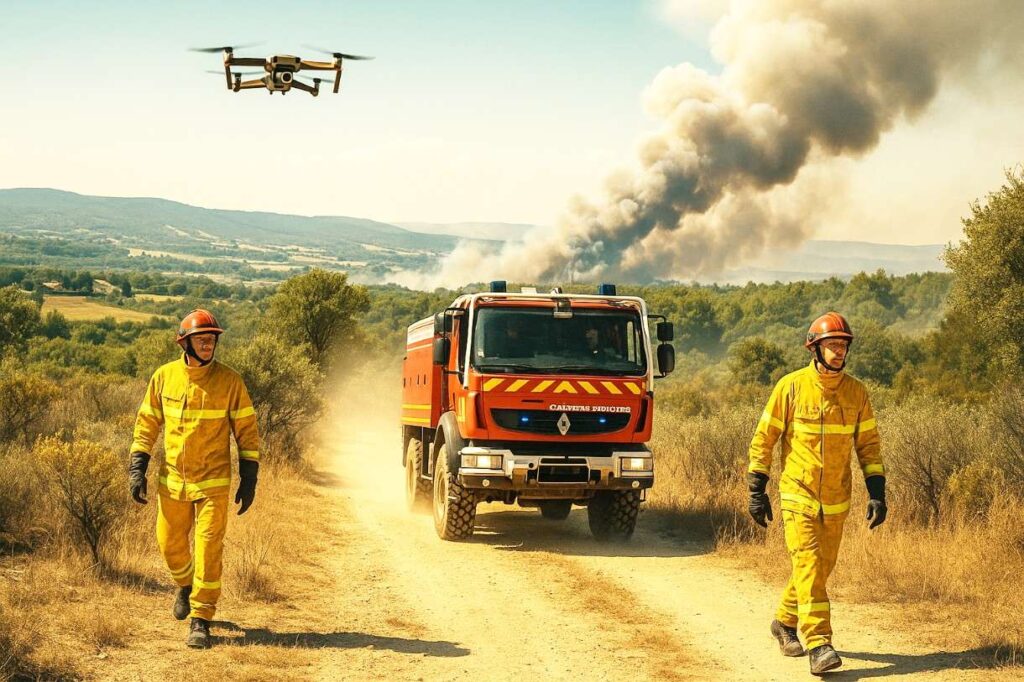
Even before summer officially picks up speed, attention in southern France is already focused on a danger many associate only with the hot months of July and August: wildfires. The orange warning level has now been issued in four départements. Affected are Aude, Hérault, Var, and Bouches-du-Rhône – regions that attract numerous tourists each year and at the same time count among the most vulnerable areas of the country.
The early alarm comes as a surprise. Normally, wildfire warnings become more prominent later in the summer. This time, however, weather conditions are causing increased vigilance. Dry air, strong winds, and increasingly parched vegetation create a situation that favors the ignition and rapid spread of fires.
The orange warning level does not mean that fires are already burning. Rather, it is a preventive classification. The French weather services regularly assess the combination of current weather conditions and dryness of the plant environment. If this results in an increased risk, the appropriate warning is issued for the affected départements.
For residents and holiday guests, this classification has practical consequences. Prefectures can temporarily restrict access to forest areas, nature parks, garrigue landscapes, or popular hiking trails. Anyone planning a spontaneous trip into the hinterland should therefore inform themselves in advance. What is still allowed in the morning can already be prohibited in the afternoon.
Leisure activities also come under closer scrutiny. Barbecues in green areas, fireworks, or working with equipment that could produce sparks are often on the list of possible bans during such phases. Authorities do not intervene out of excessive caution but out of experience. A single spark is often enough to ignite dry grass or brushwood.
One figure, cited year after year, is particularly noteworthy and nevertheless surprises many: nine out of ten wildfires are caused by human actions. Often there is no malicious intent behind it. A carelessly discarded cigarette butt, an uncleared campfire, or a machine that produces sparks is already enough.
Especially in the Mediterranean landscapes of southern France, flames can spread alarmingly quickly under unfavorable conditions. Strong winds can turn small ignition points into difficult-to-control fire fronts within minutes. For emergency services, this then becomes a race against time.
The current warning therefore serves primarily one goal: to prevent damage before it occurs. Anyone traveling in the affected regions in the coming days should take the authorities’ advice seriously and exercise special caution. This may sound like common sense – but it is often the decisive difference between a quiet summer day and a catastrophe.
If smoke or visible flames are observed: do not waste time and immediately call the emergency numbers 112 or 18.
By C. Hatty