
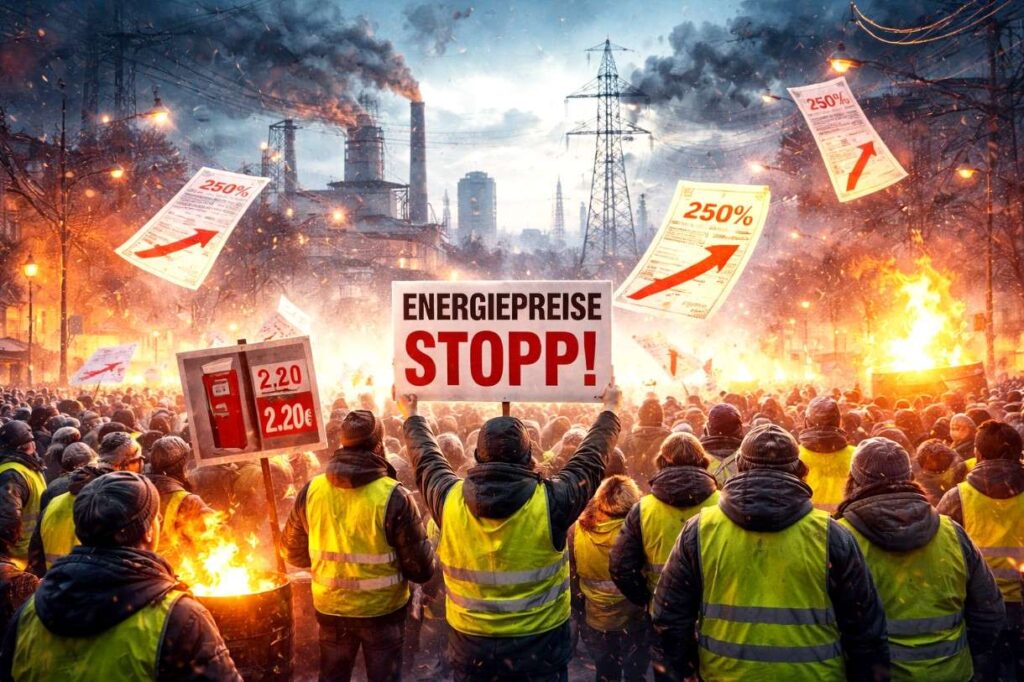
Eigentlich wusste es jede und jeder.
Wirklich.
Und trotzdem stehen wir jetzt da, schauen auf Heizkostenabrechnungen, die sich lesen wie ein schlechter Witz, und tun kollektiv so, als sei das alles irgendwie… überraschend gekommen. Steigende Preise für Gas und Öl – wer hätte das ahnen können? Ach ja, fast alle, die sich länger als fünf Minuten mit Energiepolitik beschäftigt haben.
Und nun?
Jetzt brennt’s.
Nicht nur in den Heizkesseln, sondern im sozialen Gefüge.
Teurer Alltag – oder: Wie man aus Energie ein politisches Pulverfass macht
Es beginnt immer harmlos.
Ein paar Eurocent mehr für den Liter Sprit.
Ein Aufschlag auf die Gasrechnung.
Ein leicht erhöhter Abschlag.
„Wird schon gehen“, denkt man.
Bis es nicht mehr geht.
Plötzlich verschiebt sich etwas. Und zwar nicht nur im Portemonnaie, sondern im Gefühl für Gerechtigkeit. Denn Energie ist kein Luxusgut. Niemand sitzt im Winter da und sagt: „Heute gönne ich mir mal 21 Grad im Wohnzimmer.“ Energie ist Grundversorgung. Punkt.
Und genau da liegt der Sprengstoff.
Denn wenn Grundbedürfnisse teuer werden, kippt die Stimmung. Nicht langsam. Nicht elegant. Sondern mit Wucht.
Frankreich hat das früh gespürt.
Die Gelbwesten – ein Symbol dafür, dass steigende Spritpreise eben nicht nur eine wirtschaftliche Kennzahl sind, sondern ein emotionaler Auslöser. Menschen gingen auf die Straße, nicht weil sie plötzlich politisch aktiv werden wollten, sondern weil sie sich schlicht verarscht fühlten.
Und ganz ehrlich: Kann man es ihnen verdenken?
Wer jeden Tag pendeln muss, keine Alternative hat und dann gesagt bekommt, höhere Preise seien „ökologisch sinnvoll“, der denkt sich irgendwann: Schön für die Theorie – aber ich muss trotzdem zur Arbeit kommen.
Deutschland dagegen?
Hat versucht, das Ganze mit Geld zuzuschütten.
Entlastungspakete. Preisbremsen. Transfers. Ein finanzielles Pflaster auf einer strukturellen Wunde.
Funktioniert das?
Kurzfristig vielleicht.
Langfristig fühlt es sich an wie der Versuch, ein Leck mit Klebeband zu reparieren, während das Wasser schon knietief im Boot steht.
Die große Illusion von Kontrolle
Was mich an dieser ganzen Situation am meisten irritiert – und ja, auch wütend macht – ist diese politische Inszenierung von Kontrolle.
Als hätte man das alles im Griff.
Als sei das nur eine Phase.
Als könnten ein paar Maßnahmen die Realität aushebeln.
Spoiler: Können sie nicht.
Die Wahrheit ist nämlich ziemlich unbequem.
Europa hat sich über Jahrzehnte in eine Abhängigkeit manövriert, die auf einer simplen Annahme basierte: Energie bleibt billig.
Und diese Annahme war – Überraschung – falsch.
Oder vielleicht nicht falsch, sondern einfach naiv.
Denn fossile Energie war nie wirklich billig. Sie war nur externalisiert billig. Die echten Kosten – Klimaschäden, Umweltzerstörung, geopolitische Abhängigkeiten – hat man elegant ausgeblendet.
Und jetzt?
Jetzt kommen sie zurück. Wie eine Rechnung, die viel zu lange ignoriert wurde.
Mit Zinsen.
Deutschland: Industriemotor mit Energieschock
Deutschland wirkt in diesem Drama wie ein Hochleistungsmotor, dem plötzlich der Treibstoff ausgeht.
Jahrzehntelang basierte der wirtschaftliche Erfolg auf einer einfachen Formel: starke Industrie plus vergleichsweise günstige Energie.
Chemie, Stahl, Glas – all diese Branchen leben von stabilen Energiepreisen. Wenn die plötzlich durch die Decke gehen, geraten ganze Geschäftsmodelle ins Wanken.
Und das passiert gerade.
Unternehmen drosseln Produktion. Verlagerungen ins Ausland nehmen zu. Investitionen werden verschoben.
Und dann sitzt man da und fragt sich: Wie konnte das passieren?
Vielleicht, weil man sich zu lange darauf verlassen hat, dass das System schon irgendwie funktioniert.
Hat es ja auch.
Bis es das nicht mehr tat.
Frankreich: Der vermeintlich stabile Gegenentwurf
Frankreich schaut von außen betrachtet fast beneidenswert stabil aus.
Kernenergie sei Dank.
Während Deutschland aus der Atomkraft ausgestiegen ist, setzt Frankreich weiterhin auf sie – und versucht, sich damit eine gewisse Preisstabilität zu sichern.
Das klingt erstmal nach einem strategischen Vorteil.
Ist es auch. Zum Teil.
Aber auch hier lohnt sich ein zweiter Blick.
Denn die französischen Reaktoren sind alt. Wartungsanfällig. Teuer in der Instandhaltung. Und der Ausbau neuer Anlagen dauert – Überraschung – länger als ein Wochenende.
Trotzdem wirkt das Modell robuster.
Warum?
Weil es zumindest den Versuch einer langfristigen Planung erkennen lässt.
Und genau das fehlt in der deutschen Debatte oft: eine klare, konsistente Linie.
Stattdessen gibt es Richtungswechsel, Kompromisse, Übergangslösungen.
Ein bisschen hiervon, ein bisschen davon – und am Ende die Hoffnung, dass sich schon alles irgendwie einpendelt.
Tut es aber nicht.
Energiearmut – das leise Drama
Während Politik und Wirtschaft über Milliardenbeträge diskutieren, spielt sich im Alltag vieler Menschen ein ganz anderes Drama ab.
Ein stilles.
Energiearmut.
Ein Begriff, der sperrig klingt, aber eine brutale Realität beschreibt: Menschen, die nicht mehr ausreichend heizen. Die Strom sparen, wo es kaum noch etwas zu sparen gibt. Die Entscheidungen treffen müssen wie: warme Wohnung oder volles Kühlschrankfach?
Das ist kein Randphänomen mehr.
Das ist mitten in der Gesellschaft angekommen.
Und es trifft nicht alle gleich.
Natürlich nicht.
Wer gut verdient, ärgert sich über höhere Kosten.
Wer wenig hat, gerät unter existenziellen Druck.
Und genau hier zeigt sich, wie eng Energiefragen mit sozialer Gerechtigkeit verknüpft sind.
Denn was passiert, wenn die Transformation zur klimaneutralen Gesellschaft diejenigen am härtesten trifft, die ohnehin schon kämpfen?
Dann verliert sie Akzeptanz.
Und ohne Akzeptanz?
Keine Chance.
Der Zwang zur Transformation – endlich oder leider?
Jetzt könnte man sagen: Immerhin beschleunigen hohe Preise den Umstieg auf erneuerbare Energien.
Und ja, das stimmt.
Plötzlich rechnen sich Investitionen, die vorher als „zu teuer“ galten. Plötzlich wird Effizienz sexy. Plötzlich spricht man ernsthaft über Wasserstoff, Netzausbau, Speichertechnologien.
Also alles gut?
Nicht ganz.
Denn diese Transformation kommt nicht aus einem ruhigen, strategischen Prozess heraus, sondern aus Druck. Aus Krisen. Aus Notwendigkeit.
Und das macht sie chaotischer.
Teurer.
Ungleichmäßiger.
Man könnte fast sarkastisch fragen: Musste es wirklich erst so weit kommen?
Hätten wir nicht früher, planvoller, gerechter handeln können?
Die Antwort kennt eigentlich jeder.
Energie als Machtfrage – und wir mittendrin
Was oft unterschätzt wird: Energie ist nicht nur eine wirtschaftliche oder ökologische Frage.
Sie ist Macht.
Wer Energie kontrolliert, kontrolliert Abhängigkeiten.
Deutschland hat das schmerzhaft gelernt. Der Bruch mit Russland hat gezeigt, wie riskant einseitige Abhängigkeiten sind.
Plötzlich musste alles schnell gehen: neue Lieferanten, LNG-Terminals, neue Infrastruktur.
Und das in einem Tempo, das man sich vorher nicht einmal vorstellen wollte.
Frankreich hingegen nutzt seine Position, um sich als stabiler Player zu präsentieren.
Ein bisschen wie der Nachbar, der sein Haus rechtzeitig isoliert hat, während man selbst noch überlegt, ob sich das lohnt.
Die eigentliche Krise – und warum sie uns so trifft
Wenn man ehrlich ist, geht es hier um mehr als Energiepreise.
Es geht um Vertrauen.
Vertrauen in politische Entscheidungen.
Vertrauen in wirtschaftliche Stabilität.
Vertrauen in die Zukunft.
Und genau dieses Vertrauen bekommt gerade Risse.
Denn viele Menschen spüren: Die großen Versprechen – günstige Energie, stabile Preise, wachsender Wohlstand – gelten nicht mehr uneingeschränkt.
Das erzeugt Unsicherheit.
Und Unsicherheit ist der perfekte Nährboden für Frust.
Und Frust?
Der sucht sich irgendwann ein Ventil.
Ein bisschen Hoffnung – trotz allem
So düster das alles klingt – und ja, manchmal fühlt es sich wirklich nach einem ziemlichen Schlamassel an – es gibt auch eine andere Perspektive.
Die aktuelle Krise zwingt uns, Dinge zu ändern, die längst überfällig waren.
Erneuerbare Energien gewinnen an Tempo.
Technologien entwickeln sich schneller.
Das Bewusstsein für Zusammenhänge wächst.
Und vielleicht – nur vielleicht – entsteht daraus etwas Besseres.
Eine Energieversorgung, die sauberer ist. Stabiler. Gerechter.
Aber dafür reicht Technik allein nicht.
Es braucht auch soziale Lösungen.
Denn was bringt die beste Klimapolitik, wenn sie gesellschaftlich zerbricht?
Und jetzt?
Vielleicht sollten wir aufhören, überrascht zu tun.
Vielleicht sollten wir ehrlicher diskutieren, was auf dem Spiel steht.
Und vielleicht – ganz verrückte Idee – sollten wir langfristig denken, statt von Krise zu Krise zu stolpern.
Denn eines ist klar:
Energiepreise sind längst kein Randthema mehr.
Sie entscheiden darüber, wie wir leben.
Wie gerecht unsere Gesellschaft ist.
Und wie stabil unsere Demokratie bleibt.
Oder anders gesagt – ein bisschen zugespitzt, aber hey, passt schon:
Wer Energiepolitik unterschätzt, spielt mit dem sozialen Frieden.
Und das ist ein Spiel, das wir uns eigentlich nicht leisten können.
Oder wollen wir wirklich erst reagieren, wenn es wieder auf den Straßen knallt?