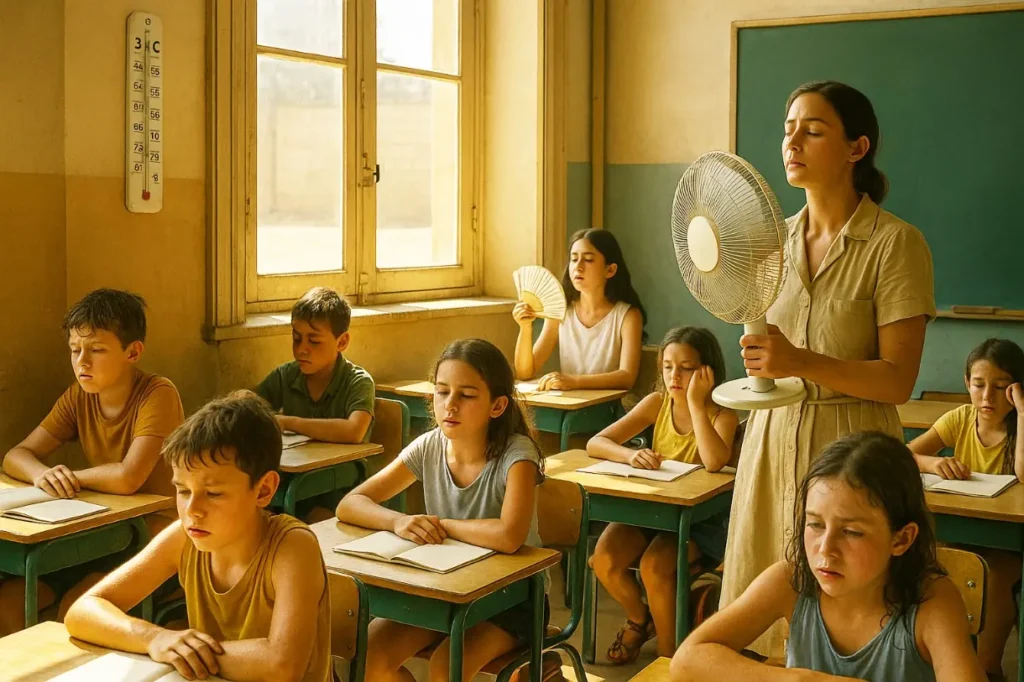
Schools are often cited as examples, their buildings frequently having inadequate insulation or air conditioning. Many homes located in densely built urban areas also become real heat reservoirs during heatwave periods. Added to this are deficits in urban greening as well as the lack of shade in public squares.
Experts emphasize that climate adaptation is no longer just an ecological issue. It increasingly concerns public health, social justice, and the economic performance of a country. The costs of insufficient preparation could, in the long term, be much higher than investments in preventive measures.
The government highlights existing emergency mechanisms
The government strongly rejects these accusations. Representatives from the Ministry of Health state that France now has considerable experience in managing heat waves. Emergency plans have been activated, hospitals and care facilities are being closely monitored, and the population is regularly informed about protective measures.
According to the government, the structures in place demonstrate that lessons have been learned from past crises. Nevertheless, government representatives also acknowledge that the increasing frequency of extreme weather events brings new challenges.
The current heatwave is considered further evidence that exceptional temperatures could increasingly become the norm in Europe. Political pressure is therefore growing not only to respond to acute crises but also to sustainably adapt cities, infrastructure, and the workplace to changed climatic conditions.
More than twenty years after the devastating heatwave of 2003, which caused thousands of deaths in France and other European countries, the question of the resilience of state structures arises again. The conflict between the government and the opposition shows that climate adaptation is no longer solely an environmental issue. It is increasingly becoming a central test of the state’s capacity for action and political credibility.
Author: P. Tiko
The exceptionally early heatwave in France is not only causing daily difficulties for millions of people, it is also becoming a subject of political conflict. While vast regions of the country are experiencing temperatures up to 39 degrees Celsius and many departments are placed under reinforced heatwave alerts, the government of Prime Minister Sébastien Lecornu is under pressure for its crisis management.
The president of the party The Ecologists, Marine Tondelier, spoke with particular clarity. She said she was “shaken” by the insufficient level of government preparedness in the face of the current weather situation. According to her, the state reacts too late to a development that meteorologists have been announcing for several days. The government is now focusing on future heatwaves, while the population must already deal with the consequences of the current extreme temperatures.
Controversy over the timing of the government response
At the heart of the criticism is an interministerial crisis meeting aimed at preparing a global action plan until the end of summer. This will address topics such as water supply, health protection, forest fire prevention, and the resilience of public infrastructure.
From the opposition’s point of view, this approach remains insufficient. Critics emphasize that while long-term planning is necessary, immediate protective measures are not highlighted enough. Schools, outdoor workers, the elderly, and those in vulnerable health situations are already exposed to significant risks.
The political debate highlights a fundamental conflict: while governments must develop long-term adaptation strategies, citizens expect concrete and immediately effective measures in times of crisis.
Call for a “climate leave”
Marine Tondelier is using the current heatwave to bring back to the political agenda an idea that has been discussed for some time. She proposes the establishment of a “climate leave.” Drawing inspiration from similar arrangements in other European countries, employees could benefit from up to five additional days off per year in the event of extreme weather events, without financial loss.
The ecologists argue that traditional work models are reaching their limits in the face of the increasing frequency of extreme weather episodes. In particular, employees in physically demanding jobs or working in buildings lacking adequate air conditioning are heavily affected by the heat.
Supporters see this measure as a necessary step to adapt to the consequences of climate change. Opponents, on the other hand, warn of additional burdens for businesses and the labor market. The debate is therefore expected to far outlast the current heatwave.
Growing doubts about climate adaptation
Political criticism is accompanied by a broader debate about France’s capacity to adapt to climate change. For years, scientists and environmental organizations have pointed out that many public institutions are still not sufficiently prepared for extreme temperatures.
Schools are often cited as examples, their buildings frequently having inadequate insulation or air conditioning. Many homes located in densely built urban areas also become real heat reservoirs during heatwave periods. Added to this are deficits in urban greening as well as the lack of shade in public squares.
Experts emphasize that climate adaptation is no longer just an ecological issue. It increasingly concerns public health, social justice, and the economic performance of a country. The costs of insufficient preparation could, in the long term, be much higher than investments in preventive measures.
Schools are often cited as examples, their buildings frequently having inadequate insulation or air conditioning. Many homes located in densely built urban areas also become real heat reservoirs during heatwave periods. Added to this are deficits in urban greening as well as the lack of shade in public squares.
Experts emphasize that climate adaptation is no longer just an ecological issue. It increasingly concerns public health, social justice, and the economic performance of a country. The costs of insufficient preparation could, in the long term, be much higher than investments in preventive measures.
The government highlights existing emergency mechanisms
The government strongly rejects these accusations. Representatives from the Ministry of Health state that France now has considerable experience in managing heat waves. Emergency plans have been activated, hospitals and care facilities are being closely monitored, and the population is regularly informed about protective measures.
According to the government, the structures in place demonstrate that lessons have been learned from past crises. Nevertheless, government representatives also acknowledge that the increasing frequency of extreme weather events brings new challenges.
The current heatwave is considered further evidence that exceptional temperatures could increasingly become the norm in Europe. Political pressure is therefore growing not only to respond to acute crises but also to sustainably adapt cities, infrastructure, and the workplace to changed climatic conditions.
More than twenty years after the devastating heatwave of 2003, which caused thousands of deaths in France and other European countries, the question of the resilience of state structures arises again. The conflict between the government and the opposition shows that climate adaptation is no longer solely an environmental issue. It is increasingly becoming a central test of the state’s capacity for action and political credibility.
Author: P. Tiko