Back

Nachrichten.fr · June 11, 2026

In the Shadow of Peenemünde: France’s Covert Integration of German Rocket Experts

The reconstruction of Europe after 1945 was not only a political and economic project but also a technological race. While the United States openly relied on German rocket knowledge with Operation Paperclip and the Soviet Union pursued similar programs, France developed a lesser-known but strategically comparable initiative. At the center was the targeted recruitment of former German engineers – a chapter that long remained in the shadow of the major spacefaring nations.

Strategic Situation at the Beginning of the Cold War

After World War II, France found itself in an ambivalent position. Politically, it was among the victorious powers, but technologically it lagged behind the USA and the USSR. Access to modern rocket technology was quickly recognized as a security policy necessity – not least in view of the emerging bloc confrontation.

The German research facility Heeresversuchsanstalt Peenemünde was considered the world leader in the field of rocket development. There, the Aggregat 4 (V2 rocket), the first functional ballistic missile, had been developed – a technological breakthrough, though achieved with the use of forced laborers from the Mittelbau-Dora concentration camp.

Against this background, Paris decided to specifically acquire German know-how. Unlike the USA, which publicly deployed prominent figures like Wernher von Braun, France acted more discreetly.

Establishment of the LRBA in Vernon

Already from 1946, France began bringing German specialists to France. The central location became the Laboratoire de Recherches Balistiques et Aérodynamiques (LRBA) in Vernon in Normandy. Around 30 to 40 German engineers worked there under French supervision on the further development of liquid rocket engines and aerodynamic concepts.

One of the key figures was Heinz Bringer, who later became known as Henri Bringer. He played a key role in the development of rocket engines and became a formative figure in French space technology. Other German specialists brought expertise from Peenemünde into the French programs, especially in the areas of combustion technology and control systems.

The integration of these experts was pragmatic: political backgrounds were rarely publicly discussed, technical skills were the focus.

Technological progress through imported knowledge

The work at LRBA led in the 1950s to the development of the so-called Véronique rockets – named after their development site in Vernon. These initially served scientific and military purposes and laid the foundation for further advances.

Particularly significant was the development of the “Viking” engine, which later became the core of European launch vehicles. This unit was ultimately used in the Ariane program family, which provided Europe with an independent access to space.

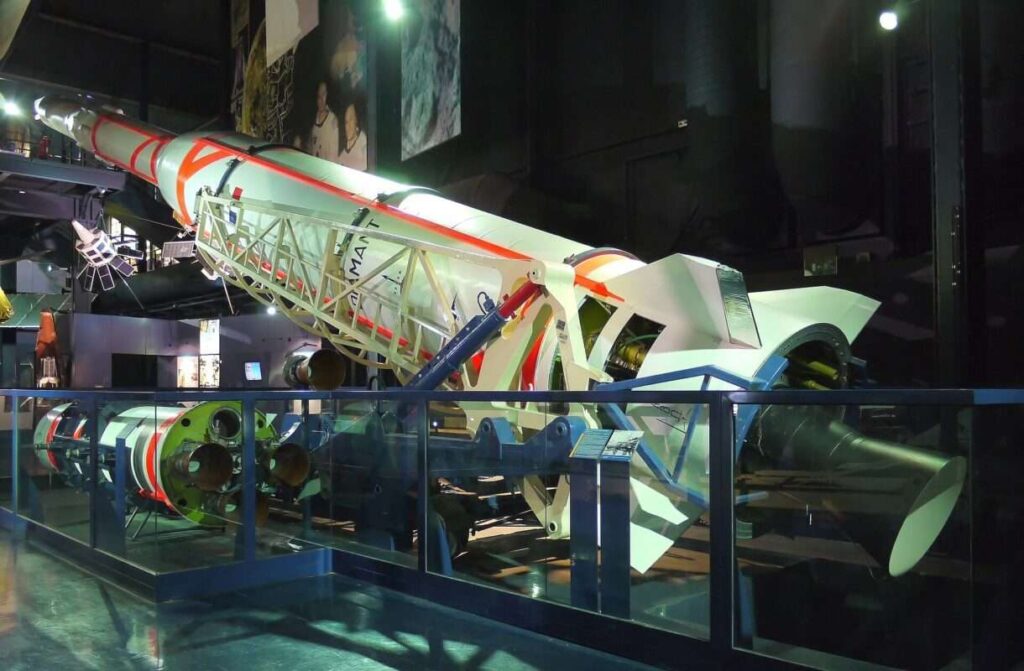
The Diamant rocket, with which France became the third nation to launch a satellite into space in 1965, also indirectly benefited from the early work of German engineers.

Political Rationality and Moral Ambiguity

The recruitment of former Nazi specialists was not a unique French phenomenon. Rather, it was a structural characteristic of the postwar period. The USA and the Soviet Union acted similarly – driven by security policy competition and technological ambition.

Nevertheless, the French case raises specific questions. While denazification programs were conducted in Germany itself, France offered individual experts new careers without comprehensively publicly addressing their past. The line between opportunistic integration and moral suppression remained blurred.

Historians point out that although many of these engineers were not senior Nazi officials, they were part of a system based on forced labor and war crimes. Thus, technical continuity was accompanied by ethical discontinuity.

The Long Shadow of the Past

For decades, this chapter of French space history remained largely unnoticed. Only with the opening of archives and the systematic research by historians did it become clear how much German expertise influenced the development of the French rocket programs.

Institutions such as the later Aérospatiale as well as the European space cooperation built upon these early developments. France became the driving force behind European space policy and established itself as a central actor within the ESA structures.

The story of Vernon is therefore not only a technical success story but also an example of the complex continuities of the 20th century – in which knowledge, power, and morality stand in a tense relationship.

France’s rise to a spacefaring nation would probably have proceeded more slowly without the import of German know-how. But this progress had a price that was long not publicly discussed. In a time when geopolitical rivalry dominated over moral concerns, technological knowledge became a strategic resource – regardless of its origin.

The ambivalence of this development remains to this day: It points to the fundamental question of to what extent scientific progress can be separated from political and ethical contexts – or whether it inevitably remains part of their history.

Author: Andreas M. Brucker