The first major heatwave of the year struck France unusually early, and Paris is feeling its effects particularly strongly. Since the end of May, high temperatures have not been uncommon, prompting meteorological authorities to issue an orange heatwave warning for the capital region and neighboring departments. For millions, this period is a significant burden not only during the day but also at night.
When you think of Paris, you often imagine broad boulevards, historic building facades, and lively squares. However, it is precisely this dense urban structure that causes large cities to retain much heat during high temperature conditions. Asphalt, concrete, stone, and other materials store heat for several hours. Even after the sun sets, the air in most areas remains uncomfortably warm, making it difficult to get a comfortable night’s sleep.
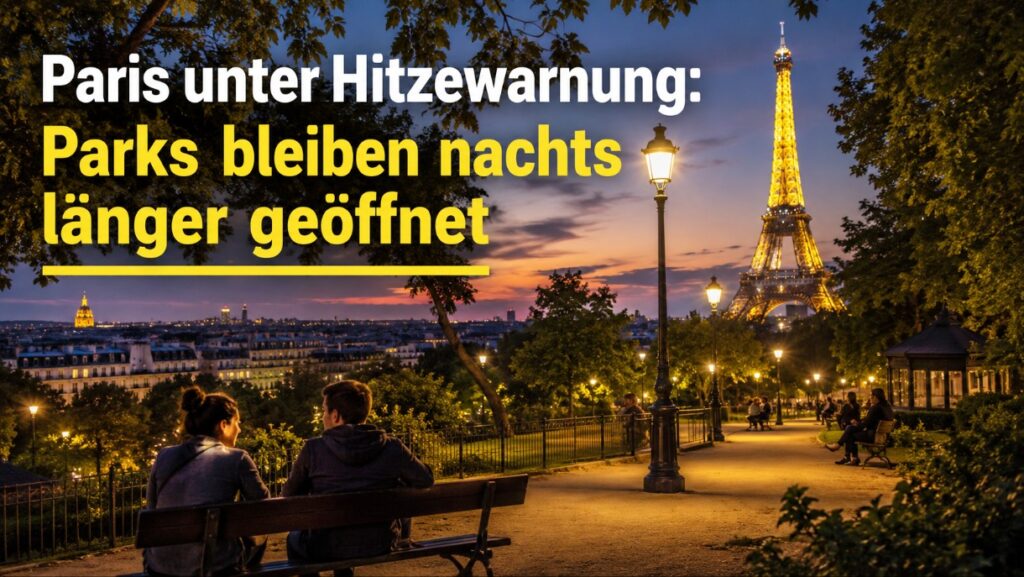
In response, city authorities have been taking measures that have grown increasingly important in recent years. One such measure is keeping parks and green spaces open until later hours. Several large parks remain open until midnight, and some green areas are accessible throughout the night. For many residents, these spaces are more than just recreational facilities. The trees provide shade and serve as a much cooler and more pleasant refuge compared to the densely built surroundings.
Especially people living in narrow and poorly insulated attics or buildings cool off here. When their own home feels like an oven, sitting on a bench under the shade of an old chestnut tree at night feels almost like a luxury.
Alongside this, the city is also providing additional cooling rest areas. Public buildings and city-established facilities open their doors especially for vulnerable people. They make sure that seniors, people with chronic illnesses, and families with young children can avoid the hottest hours. Some swimming pools also extend their operating hours.
This weather situation once again shows how strongly large cities must adapt to changing climate conditions. Green spaces, waterways, and shaded rest areas are increasingly coming to the forefront of urban planning. What used to be considered simply convenience services are now gradually becoming public health issues.
It is still uncertain whether this heatwave will remain a singular exceptional event or be a sign of the upcoming spring season. However, one thing is clear: May in Paris already feels like midsummer.
Author: C.H.