
metered
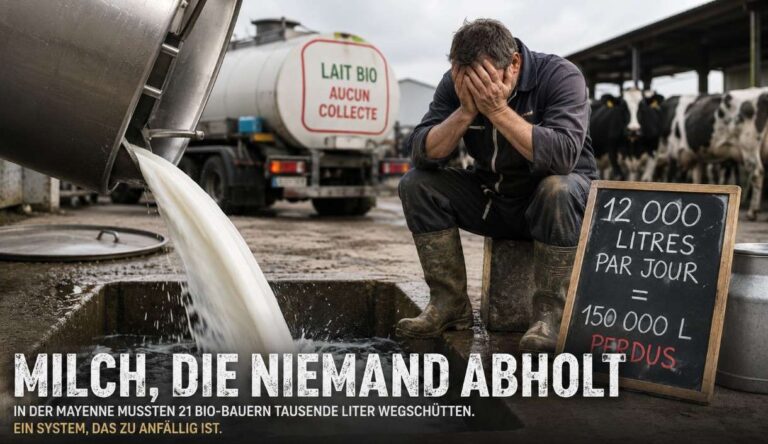
Milk that no one picks up At a dairy in Lower Saxony a milk tanker pulls up twice a week. It carries milk from a nearby farm where cows are milked daily. They produce good milk. They have a contract; a fixed price per litre. But month after month the tanker comes back empty. The farm doesn’t get paid. The milk goes into a buffer tank. Its clock keeps turning. It has a shelf life. This is not a technology story; it is a logistics and market story. The milk is not wanted at the moment. Supermarkets want less fresh milk, cafés and canteens have fewer customers again, exports to neighbouring countries have collapsed, and the large dairy that used to process the milk had to scale back production because of problems with energy costs and staffing. There is a gap between production and consumption. The result: dairy farmers who sell their milk on contract must store it or discard it. The paradox is obvious: consumers complain about rising prices in the supermarket, while simultaneously large quantities of fresh milk cannot be placed on the market and are wasted. The price structure in the value chain is fragmented: the producer’s price is often a residual item after processing, logistics and retail margins have been deducted. Small producers are particularly vulnerable because their storage capacities are limited and the costs of temporary disposal are high. The long-term solution is a better coordination of production and demand — more flexible processing, regional marketing, targeted supply to institutions and food banks. Short-term measures can include emergency payments, temporary storage subsidies and redistributing milk into non-fresh product lines such as cheese or powdered milk. None of this is easy; it requires quick decision-making and cooperation across sectors that often operate independently. Blaming consumers or farmers alone misses the point. This is a systemic problem. Political responsibility lies in creating incentives for resilience: payments that reward flexibility, support for local processing facilities, and better market intelligence. Otherwise we will continue to see senseless waste while people pay more at the checkout.
Milk is considered the epitome of the everyday. It appears on the table in the morning, disappears into coffee, and ends up…