
metered
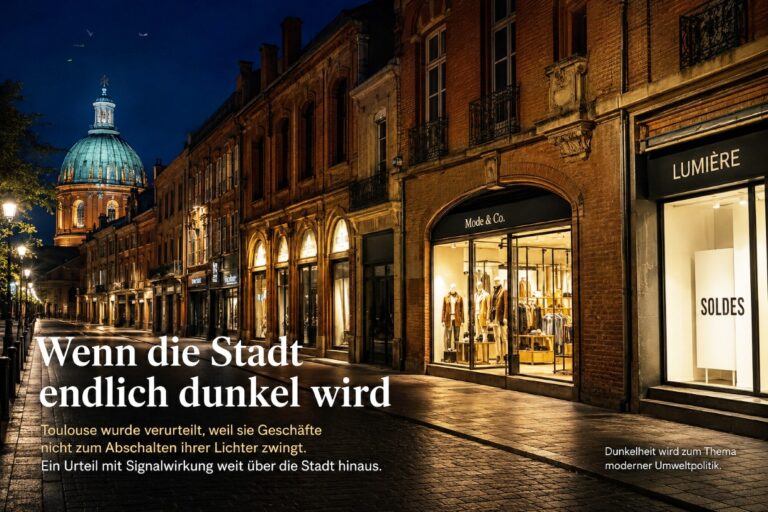
When the city finally becomes dark There are cities that never sleep. They throb, shine, ring and glow around the clock. Las Vegas, Manhattan, parts of Berlin—advertising, office lights, late-night cafés, subway tunnels—someone always keeps the lights on. You can feel alive in such a city; you can also feel overwhelmed, exhausted, unable to escape the constant stimulation. So it is a special moment when a city finally becomes dark. Not total blackness—there are always stray glows, the orange of sodium lamps, the occasional lobby light—but a collective pause, an hour when office towers go quiet, shop windows dim, the neon of boulevards loses its edge. It is then that the city reveals another face: quieter, more private, more honest. At first, darkness can be disorienting. We are used to being watched and lit; our routines are choreographed by illuminated signals. But in the dark the noises change, distances shift, the geometry of streets is different. People move differently too. Those who had the courage to slow down during the day now move contemplatively; those who used the night for concealment become more noticeable. Crime does not necessarily rise; often the opposite is true: fewer passers-by mean fewer incidents of opportunistic theft, and a calmer night deters the petty spectacle of late‑night excess. There is also a cultural dimension. Artists, poets and musicians have always sought the city’s night for inspiration. Without the glitter, subtle textures stand out: the patina on a building, a faint conversation in a doorway, the rhythm of footsteps. For a moment the metropolis becomes an intimate place; you can hear its breath. Economically and politically, however, darkness is contested. Street lighting is public infrastructure; decisions about when and where to keep lamps burning reflect priorities. Cuts in lighting are sometimes sensible attempts to save energy and reduce light pollution. But they can also result from neglect, lead to feelings of insecurity in marginalized neighborhoods, and signal a withdrawal of municipal presence. The challenge for urban planners is to balance safety, ecology and liveliness: targeted lighting that illuminates sidewalks and crossings, while sparing the night sky from unnecessary glare. Technically, modern solutions are abundant: motion‑sensitive lamps, warmer color temperatures, dimming systems, and smarter scheduling. But technology alone cannot decide when a city should sleep. That is a civic question. Who is allowed to be visible at night? Whose businesses depend on late‑hour customers? Which streets must remain lit for emergency services? There is no one-size-fits-all answer. Ultimately, when a city becomes dark it asks its residents to re-evaluate their relation to the urban environment. Darkness can be restorative; it can protect nocturnal ecosystems and give people a chance to recover. It can also alienate those who need the city’s constant glow for work or security. The proper response is not to fetishize perpetual illumination nor to romanticize absolute darkness, but to design nights that are diverse and considerate. So let the city sleep now and then. Let its lights go down in a controlled, democratic way. In the mornings, when the lamps return, the streets will have their ordinary faces again—perhaps quieter, perhaps cleaner, certainly more ready for another day’s churn.
Toulouse likes to light up. The pink façades of the metropolis in the south of France glow at night like the sets…