Back

Nachrichten.fr · May 30, 2026

Tende – The Italian Memory of France

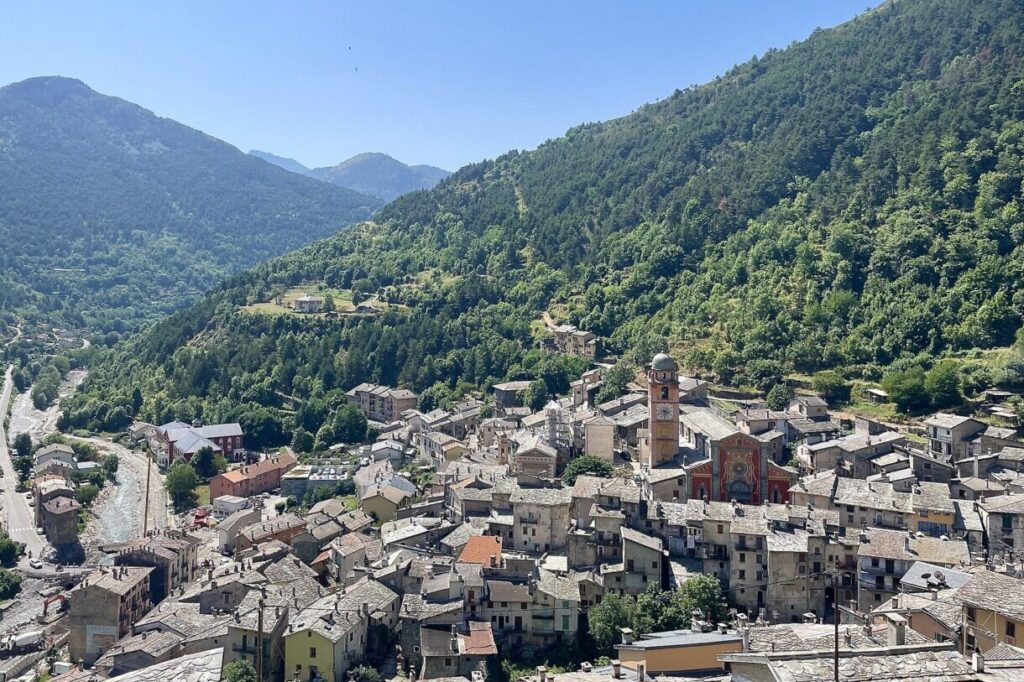
At first glance, Tende looks like many other mountain villages in the French Alpine region. The tricolor flag flutters in front of the town hall, the administration speaks French, the children attend French schools, and daily life follows the rhythm of the Republic. Nothing indicates that this place actually did not belong to France until the mid-20th century.

And yet, there is a special atmosphere about Tende. Anyone walking through the narrow streets quickly notices that something is different here. The facades tell a different story, just like the surnames. Behind the windows, a memory lives on that could not be erased by political decisions. Tende now belongs to France. However, the cultural heart has been beating for centuries in an area that stretches far beyond national borders.

The history of this village begins long before the modern nation-states. For centuries, Tende was under the influence of the House of Savoy. Later, it became part of the Kingdom of Italy, which emerged in the 19th century from the unification movement. For the residents, that was nothing special. The connections across the Alps were a daily routine. Merchants, herders, and travelers had been crossing the passes for generations. The mountains did not form an obstacle, but a lifeline.

Then came the Second World War.

When Europe tried to heal its wounds, the victors shifted maps in various places. With the Treaty of Paris in 1947, Tende and the neighboring La Brigue became part of France. For world politics it was a minor issue. For the people in the Roya, it was a break of historical significance.

Within a few months, they changed nationality without having to leave their homes.

A village remained. The border was moved.

The schools switched to French. Administrative processes changed. Government agencies, laws and institutions received new names. Those who yesterday were still Italian were suddenly considered French.

But identity rarely follows the logic of treaties.

Those who have ever experienced how deeply connectedness with home is intertwined with language, memories and family stories understand why such changes occupy generations. The inhabitants of Tende had not only to accept a new passport. They had to learn to live with two historical affiliations.

Perhaps this is precisely the special fascination of this place.

In the streets of Tende, the past never seems completely gone. The houses stand close together, their facades glow in warm colors. Much is more reminiscent of mountain villages in Piedmont than of the postcard world of Provence. The architecture serves as a quiet witness to a time when these valleys were part of a shared cultural space.

Even the surnames tell stories. Numerous residents bear names that clearly reveal Italian roots. Behind many doors, family ties still exist across the border. Cousins, aunts, or grandparents live in the neighboring valleys of Piedmont or Liguria.

The border exists.

The family ties often ignore it.

This heritage is especially visible in the language. Nowadays, French naturally dominates. Yet many older residents have preserved Italian or Tendasque for decades. This local dialect combines influences from Ligurian and Piedmontese and forms a linguistic mosaic that has originated only in this region.

Some expressions still appear in conversations today. They flash between French sentences like old acquaintances refusing to leave the stage for good.

Language has an amazing endurance. It preserves memories long after documents have yellowed.

The same goes for the cuisine.

Those who sit at a big family table in Tende encounter no strictly French or Italian tradition. Instead, a culinary border region emerges. Ravioli stand alongside alpine specialties. Polenta is just as natural as savory mountain quiches. Many recipes date back to times when no one thought about national affiliation.

After all, food knows no customs posts.

People adopt dishes, adjust them, and refine them over generations. This way, a cuisine emerges that is shaped less by political borders than by climate, landscape, and shared experiences.

But Tende is not limited to its Italian past.

Anyone who wants to understand the place must go further back. Much further.

Above the village begins one of the most fascinating cultural landscapes in Europe: the Vallée des Merveilles, the valley of wonders. Between rocks and mountain lakes are thousands of prehistoric rock carvings. People engraved them into the stone thousands of years ago, long before anyone thought of France, Italy, or Savoy.

The view of these testimonies changes the perspective.

Suddenly, political borders seem astonishingly young.

Dynasties came and went. Kingdoms arose and disappeared. States were founded, divided, and reorganized. The mountains remained. They were already there when people in the Bronze Age carved their signs into the rocks. They will probably still be there long after the current discussions have been forgotten.

Precisely in this lies a quiet lesson of this landscape.

Whoever walks through the heights of the region encounters a dimension of time that relativizes human conflicts. The engravings remind us that history does not begin with nation-states. It goes much deeper and is rooted in a relationship between humans and nature that is thousands of years old.

The local museum is dedicated to this special heritage. It connects archaeology with regional history and impressively shows how many layers of identity are hidden in a single valley.

As a result, Tende has something that has become rare in Europe: the capacity to make different layers of time visible simultaneously.

Here prehistory, Italian heritage, and French presence meet in a small area.

And amazingly enough, this happens without major conflicts.

While in other parts of Europe historical border changes continue to fuel political tensions to this day, Tende radiates remarkable calm. The inhabitants do not carry their dual history as a burden, but as a family album. It is part of life without constantly being in the spotlight.

You feel a pragmatic pride.

Not in demarcation.

But in versatility.

Perhaps this attitude explains why the place is so fitting as a symbol of a modern Europe. The residents do not have to choose whether they are shaped by France or Italy. They are both. And at the same time much more.

Is identity really an either-or?

Or does it resemble more a river that takes in many tributaries and yet remains the same?

Tende provides a remarkable answer to this.

The proximity to the Italian border creates numerous contacts to this day. Tourism, cultural events, and private ties connect the valleys on both sides of the Alps. Many encounters seem natural. The border appears more as an administrative marker than a dividing line.

This connectedness became especially clear during the severe storms that have plagued the Roya Valley in recent years. When roads disappeared, bridges collapsed, and entire villages were temporarily cut off from the outside world, people on both sides of the border helped each other.

In such moments, political categories lose their meaning.

Only the community counts then.

The mountains regularly present their inhabitants with challenges. Perhaps this creates a feeling of togetherness that is older and stronger than national stories.

People simply help each other.

Very simply.

Nowadays, anyone walking through Tende will not find a place stuck in nostalgia. The village lives in the present. At the same time, it cherishes a culture of memory that neither echoes nor suppresses. The past remains visible without obstructing the view of the future.

That is what makes Tende so special.

It shows that history does not necessarily divide. It can also connect. It can teach people to tolerate contradictions and see different affiliations as enrichment.

In a time when many places are once again drawing sharp borders and playing identities against each other, this small Alpine village seems almost like a quiet counterpoint.

Here there exists another model.

A place where multiple memories take place alongside each other.

A place where the past does not disappear, but remains part of everyday life.

And a place where France and Italy are not opposites, but chapters of the same story.

Perhaps this is precisely the true enchantment of Tende. Not in spectacular sights or great historical monuments. But in that rare capacity to connect different worlds.

It shows that history does not necessarily divide. It can also connect. It can teach people to tolerate contradictions and see different affiliations as enrichment.

In a time when many places are once again drawing sharp borders and playing identities against each other, this small Alpine village seems almost like a quiet counterpoint.

Here there exists another model.

A place where multiple memories take place alongside each other.

A place where the past does not disappear, but remains part of everyday life.

And a place where France and Italy are not opposites, but chapters of the same story.

Perhaps this is precisely the true enchantment of Tende. Not in spectacular sights or great historical monuments. But in that rare capacity to connect different worlds.

Between the mountains of the Roya lives a piece of Europe that was ahead of its time.

French on the passport.

Italian in the memory.

Alpine in the soul.

An article by M. Legrand