
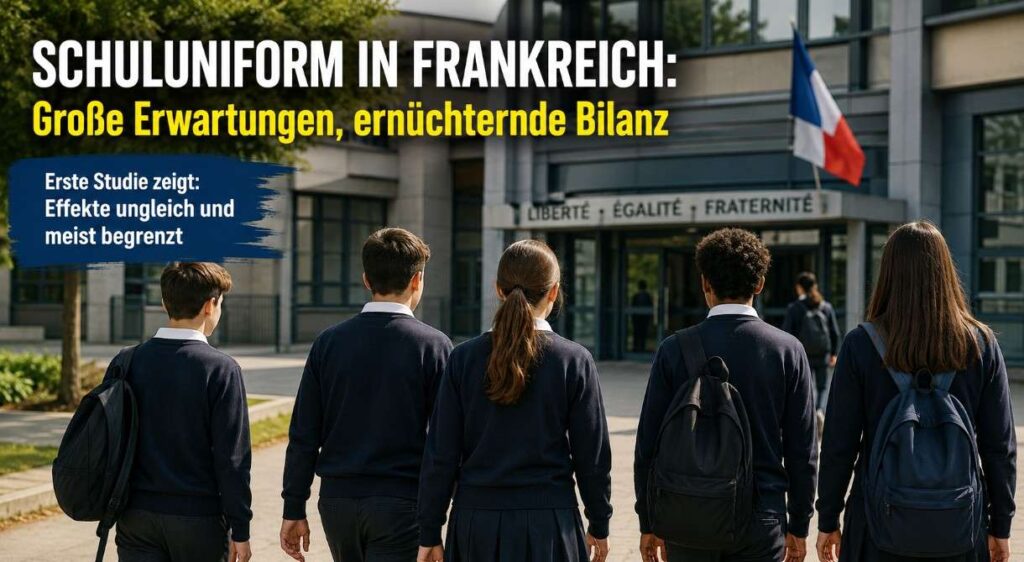
Hace dos años, el uniforme escolar en Francia todavía se consideraba un símbolo político. Representaba orden, autoridad y la esperanza de una escuela que recuperara una orientación perdida. Hoy el tono suena mucho más sobrio. La primera evaluación nacional del experimento, en marcha desde el curso escolar 2024, muestra un panorama mixto: con éxitos limitados y muchas preguntas abiertas.
El proyecto fue impulsado por el entonces ministro de Educación Gabriel Attal. La idea detrás parecía a primera vista simple: si todos visten igual, las diferencias sociales desaparecen al menos externamente. Menos presión de marcas, menos exclusión, menos conflictos. Además, más cohesión y un sentimiento de comunidad más fuerte.
Casi un centenar de escuelas, así como varios Collèges y Lycées voluntarios, participaron en el ensayo.
La realidad, sin embargo, resulta más complicada.
Muchos directores informan, de hecho, de efectos positivos. El sentimiento de pertenencia a la propia escuela se ha fortalecido, las tensiones por la ropa han disminuido en parte. Algunos docentes describen incluso atmósferas de clase más tranquilas. En ciertos centros surgió algo así como un nuevo espíritu de equipo —casi un poco como en los clubes deportivos, donde la camiseta común crea identidad.
Pero el gran avance no se produjo.
El estudio del Ministerio de Educación habla expresamente de impactos «desiguales» y «limitados». Sobre todo entre los distintos centros se observan enormes diferencias. Mientras algunos establecimientos registran pequeñas mejoras, en otros lugares prácticamente no cambia nada.
Esto se aprecia especialmente en el rendimiento escolar. Hasta ahora no se observan ni mejores calificaciones ni avances de aprendizaje medibles. Los investigadores recuerdan que las tensiones sociales en las escuelas rara vez están relacionadas solo con la ropa. La exclusión también se produce sin zapatillas deportivas caras. Los jóvenes encuentran otras formas de hacer visibles las diferencias —a través de los smartphones, el lenguaje, las redes sociales o las actividades de ocio. En resumidas cuentas: la tela por sí sola no resuelve los conflictos sociales.
También es interesante la mirada del alumnado.
Muchos jóvenes reaccionan con considerable escepticismo, más que los adultos. Sobre todo en la educación secundaria, numerosos jóvenes perciben la ropa impuesta como una restricción de su personalidad. Algunos se quejan de cortes incómodos o de tejidos poco prácticos. Otros dicen simplemente: «De todas formas no sirve para nada.»
Ahí radica probablemente el núcleo del debate.
Porque en Francia el tema del uniforme ya no se reduce solo a jerséis o blazers. Para los partidarios encarna un retorno a la disciplina, al respeto y a los valores republicanos. En cambio, los críticos lo ven más bien como una medida simbólica que enmascara problemas más profundos: falta de profesores, tensiones sociales, violencia en las escuelas y un sistema educativo que en muchos lugares cruje como un viejo motor diésel a punto de entrar en invierno.
A esto se suma la cuestión del coste.
Dotar a cursos completos de estudiantes implica gastos considerables para municipios y familias. Una implantación a nivel nacional podría devorar miles de millones. En tiempos de presupuestos tensionados, eso provoca precisamente una mayor cautela política.
Por ello el gobierno francés actúa con cautela. El Ministerio de Educación quiere esperar primero a más resultados antes de tomar una decisión sobre una ampliación.
Al final queda una constatación que a menudo se pierde en el intercambio político: la escuela no cambia automáticamente solo porque los niños lleven por la mañana la misma chaqueta.
Por C. Hatty